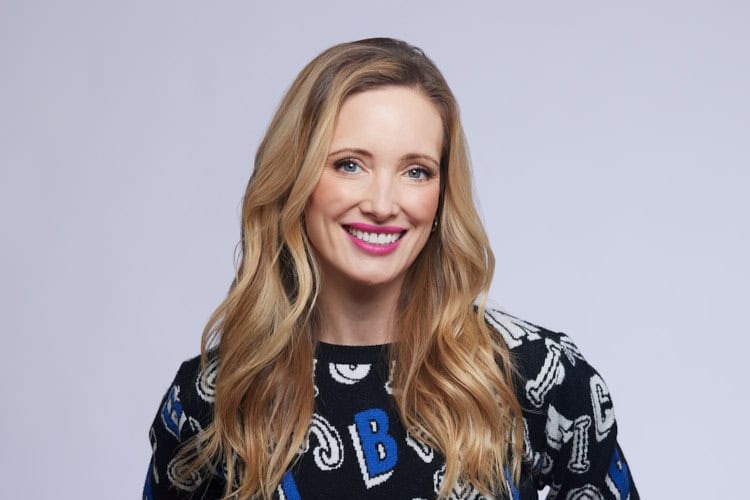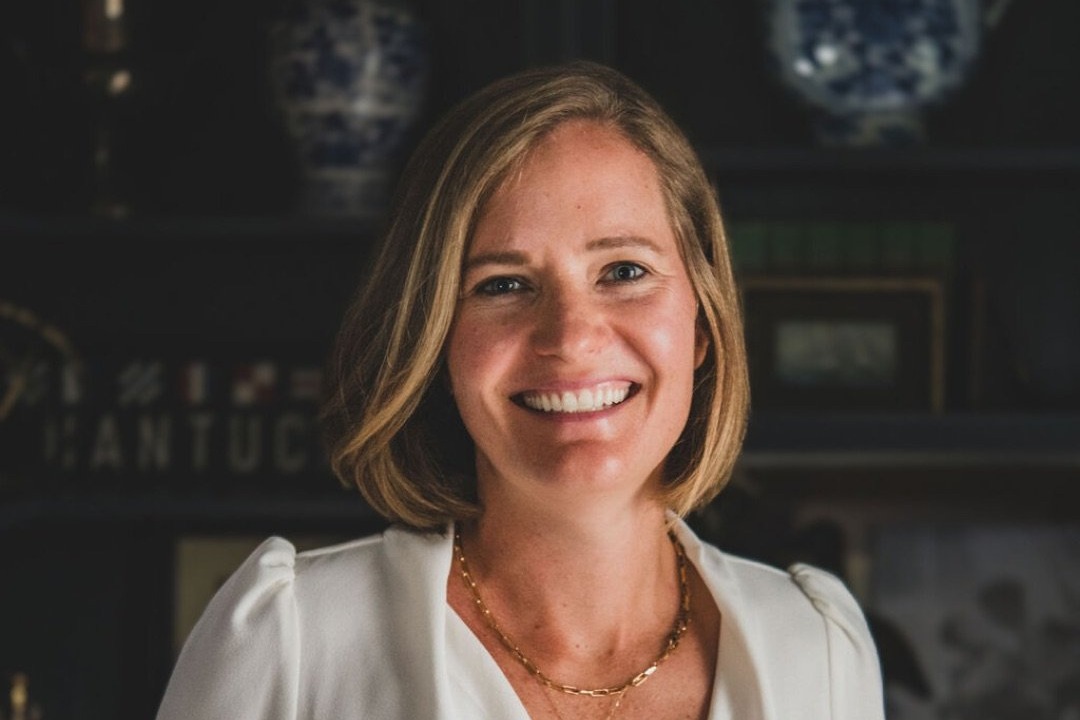
When Brittany Martin Déjean was 12 years old, a car accident killed her younger brother and left her father a quadriplegic. She watched people around her father stumble through awkward interactions — reaching out, or avoiding him altogether — and years later she caught herself doing exactly the same thing. That pattern became the foundation of her company: Inclusion Jumpstart, the business she launched in 2025 to help non-disabled leaders get comfortable with disability so they can build stronger teams, safer cultures and better products.
The problem she addresses is enormous. An estimated 1.3 billion people — 16% of the world's population, or one in six of us — experience significant disability, according to the World Health Organization (2023). In the United States, more than one in four adults (28.7%) have some type of disability, the Centers for Disease Control and Prevention reports (2024). Yet the workplace gap remains wide: in 2024, the employment-population ratio was 22.7% for people with a disability against 65.5% for those without one, the U.S. Bureau of Labor Statistics reported (2025). Closing that gap is the work Brittany Martin Déjean has been doing for nearly two decades — first as a nonprofit founder, then inside Airbnb, and now as an entrepreneur in her own right.
Table of Contents
- A Car Accident That Changed Everything
- AbleThrive: The First Venture
- Six and a Half Years at Airbnb
- Launching Inclusion Jumpstart
- The FOMU Method
- Business Lessons for Founders
- What's Next
- Frequently Asked Questions
- Sources
A Car Accident That Changed Everything
The accident that shaped Brittany Martin Déjean's career happened when she was 12, and it gave her two gifts she now sells: a first-hand understanding that disability is not the end of a meaningful life, and a sharp eye for the awkwardness that surrounds it. To her, her father was still just her dad. To everyone else, he became a problem to be handled carefully or avoided completely. "I realized not only how deeply awkwardness shapes our interactions, but how engrained it is in our culture and how much damage it causes," she told CanvasRebel in December 2025.
That observation turned into a professional mission. After nearly two decades working in disability inclusion, she concluded that the biggest barrier to inclusion is not budgets or infrastructure — it is the discomfort of the people holding decision-making power. Her answer is to name that discomfort, dissect it in front of the people who feel it, and give them a practical way past it. It is an unusual product for a founder to build: she sells perspective shifts rather than software, and her clients are HR leaders, ERG founders, executives and product teams who know their intentions are good but suspect their instincts are not.
AbleThrive: The First Venture
Brittany Martin Déjean built her first organisation, the nonprofit AbleThrive, to solve a very practical problem: finding reliable information after paralysis. The platform curating resources for people with disabilities and their families grew into a serious operation — it mobilised more than 200 global partners and was selected as an Echoing Green fellow, recognition for global impact and innovation, before it was acquired in 2021 (IdeaMensch, 2025). She also co-founded SPINALpedia, a how-to video network for people with paralysis and their families, which she ran for seven years.
The venture taught her the lessons she now repeats to clients. Running a nonprofit, she was convinced that hours worked equalled success and that more was always better. She later unlearned it. "What I've come to understand is that it's more about alignment and rigorous prioritisation that lead to success," she said. The exit also taught her the unglamorous side of building: after a disagreement with a co-founder she walked away from seven years of work and started again from zero. The scar became a rule — clear communication and written contracts, plus the discipline to trust her own intuition when something feels wrong.
Six and a Half Years at Airbnb
In 2018 she joined Airbnb as an accessibility community manager and stayed six and a half years, leaving in March 2025 as a Product Equity Manager. In that time she led disability inclusion and accessibility workshops in nine countries, ran more than 20 host education accessibility events across the United States, Europe and Asia in 2019 alone, and trained over 1,000 employees and hosts (Inclusion Jumpstart, 2026; IdeaMensch, 2025).
Corporate work gave her scale, and the numbers explain why companies pay for it. Only 22.7% of Americans with a disability were employed in 2024, against 65.5% of those without a disability, and unemployment stood at 7.5% versus 3.8% for the two groups respectively (U.S. Bureau of Labor Statistics, 2025). Most disabilities are non-apparent, meaning an employer's workforce already includes people with disabilities whether or not anyone has disclosed it. Avoiding the topic, as she puts it, is not a viable strategy — it only postpones the risk while employees absorb the cost.
Launching Inclusion Jumpstart
Inclusion Jumpstart is Brittany Martin Déjean's answer to the awkwardness she observed in every organisation she worked with: a consulting and speaking business built around two signature keynotes, workshops and coaching. The company was registered in 2025, the same year she left Airbnb, and it lets her do the one thing she loved most about every previous role — reframing someone's discomfort about disability — for clients who choose to be there.
The pitch is commercial as well as moral. Companies that lead on disability inclusion outperform their peers: Accenture's research with Disability:IN and the AAPD found that the 45 leadership companies it identified delivered 28% higher revenue, double the net income and 30% higher economic profit margins over a four-year period, and estimated that wider participation could add up to US$25 billion to U.S. GDP (Accenture, 2018). That is the frame she sells to executives who do not respond to ethics alone — inclusion as a performance lever, not a compliance line item.
The FOMU Method
The engine of her business is FOMU — the Fear of Messing Up — a term she coined to describe the paralysis she watched well-intentioned professionals develop around disability: overthinking, second-guessing and recovering from mistakes longer than they deserved. Her method is a three-step system that debunks misconceptions and helps people move through the fear rather than around it, delivered through keynotes, facilitated workshops and the FOMU to Flow coaching intensive for individuals.
It works because it starts from empathy instead of instruction. Her clients are allowed to admit they are uncomfortable, which is often the first time they have said it out loud. According to her own reporting, clients have reduced the time lost to FOMU each week by an average of 73% (Inclusion Jumpstart, 2026). The underlying market is not niche: 28.7% of U.S. adults have some type of disability, from cognition (13.9%) to mobility (12.2%) and hearing (6.2%), according to the CDC (2024). Every team she trains already includes people from that population — and, increasingly, leaders who are afraid of saying the wrong thing to them.
Business Lessons for Founders
The most useful lesson from Brittany Martin Déjean's career is that a niche built from personal experience can outperform a broad one built from market research. She kept her story and her "why" at the front of every conversation for twenty years, and that consistency — not advertising — is what built her reputation and her referrals. "The only strategy that has remained consistent and has served me at every stage of my career is to commit to being myself and be open about who I am and why I care," she said.
Three further lessons stand out for founders:
- Alignment beats volume. She now operates with a simple filter: if an opportunity does not align, it is a no. Focus on one thing and do it rather than doing everything at once.
- Contracts protect relationships. Walking away from seven years of work taught her that clear agreements and communication are what allow partnerships to survive disagreement — or end without destroying the founder.
- Authenticity is a distribution strategy. People remember and refer a founder whose motivation is legible. Her network came from being open about her father, her failures and her standards.
The commercial context helps. With unemployment at 7.5% for people with a disability against 3.8% for everyone else (U.S. Bureau of Labor Statistics, 2025), the case for inclusive hiring has never been easier to quantify. Founders making similar transitions will find kindred spirits on this magazine: Cydnee DeToy, who left a C-suite career to coach ambitious women, and Palveshey Tariq, who moved from MIT research into conscious leadership coaching, both turned expertise into an independent practice. Disability-focused founders can also look to Peri Finkelstein, who built a million-dollar inclusion movement, while 5 Leadership Lessons Every Woman Executive Should Embrace covers the leadership fundamentals Brittany Martin Déjean trains every week.
What's Next
Brittany Martin Déjean now splits her work between Inclusion Jumpstart's keynotes, her FOMU to Flow coaching programme and a newer venture, Intentional Joy Club, which she launched as Founder and Chief Joy Officer in September 2026. The new company extends the same insight into a different territory: high achievers who have traded perfectionism for flow, and who need permission to have fun again. Her speaking practice continues under her own name, with keynotes aimed at HR and DEI leaders, ERG organisers, leadership conferences and women's leadership programmes.
She has worked with disability communities on three continents and changed the perspectives of thousands of professionals (IdeaMensch, 2025), but the ambition is larger: millions of people excluded because others are too uncomfortable to try. For a founder whose entire business is built on converting discomfort into action, that is exactly the right kind of stretch goal.
Frequently Asked Questions
Who is Brittany Martin Déjean?
Brittany Martin Déjean is a keynote speaker, coach and founder of Inclusion Jumpstart, a company that helps non-disabled leaders get comfortable with disability. A Harvard graduate and former Airbnb Product Equity Manager, she founded the nonprofit AbleThrive and has worked in disability inclusion for nearly two decades.
What is Inclusion Jumpstart?
Inclusion Jumpstart is the business consulting and services company Brittany Martin Déjean founded in 2025, after leaving Airbnb. It offers two signature keynotes, workshops for HR teams, ERGs and product groups, and coaching, all built around her FOMU framework.
What does FOMU stand for?
FOMU stands for Fear of Messing Up — a term Brittany Martin Déjean coined for the overthinking, second-guessing and avoidance that stop well-intentioned professionals from engaging with disability. Her three-step system helps people recognise and interrupt that cycle before, during and after a mistake.
What happened to AbleThrive?
AbleThrive, the nonprofit Brittany Martin Déjean founded to curate resources for people with disabilities and their families, was acquired in 2021. It had mobilised more than 200 global partners and earned an Echoing Green fellowship before the exit.
What results do clients get from FOMU to Flow?
According to Inclusion Jumpstart's own reporting, clients have reduced the time lost to FOMU each week by an average of 73%. FOMU to Flow is available as a self-paced programme, a small-group intensive and one-to-one coaching.
Who hires Brittany Martin Déjean to speak?
HR and DEI leaders, employee resource groups, product and engineering teams, leadership conferences and women's leadership programmes book her keynotes. Her two most requested talks are Beyond Awkward, on psychological safety through disability inclusion, and Facing FOMU, on courage and innovation.
Conclusion
Brittany Martin Déjean turned the most painful event of her childhood into a two-decade career and, eventually, a company. AbleThrive gave her entrepreneurial instinct, Airbnb gave her scale and a global stage, and Inclusion Jumpstart gave her the freedom to work only on the problem she cares about most. Her story is a useful template for founders who suspect that their own experience is too specific to be a business: with the right framing, a personal story becomes a method, a method becomes a product, and a product becomes a company that other people will pay to change how they see the world.
Sources
- CanvasRebel — Meet Brittany Martin Déjean (December 2025): the accident, the awkwardness thesis, unlearning hustle, reputation building.
- IdeaMensch — Brittany Martin Déjean, Founder of Inclusion Jumpstart (2025): AbleThrive's 200+ partners, 2021 acquisition, Echoing Green fellowship, nine countries of workshops, co-founder failure and key learnings.
- Inclusion Jumpstart official website (2026): keynotes, FOMU to Flow programme, 1,000+ employees and hosts trained at Airbnb, 73% average reduction in time lost to FOMU.
- LinkedIn profile of Brittany Martin Déjean: Airbnb roles and dates, SPINALpedia, Inclusion Jumpstart (2025) and Intentional Joy Club (September 2026).
- World Health Organization — Disability fact sheet (2023): 1.3 billion people, 16% of the world population.
- U.S. Centers for Disease Control and Prevention — Disability Impacts All of Us (2024): 28.7% of U.S. adults, cognition 13.9%, mobility 12.2%, hearing 6.2%.
- U.S. Bureau of Labor Statistics — Persons with a Disability: Labor Force Characteristics, 2024 (February 2025): employment-population ratio 22.7% vs 65.5%, unemployment 7.5% vs 3.8%.
- Accenture — Getting to Equal: The Disability Inclusion Advantage (2018): 28% higher revenue, double net income, 30% higher economic profit margins, up to US$25 billion GDP boost.