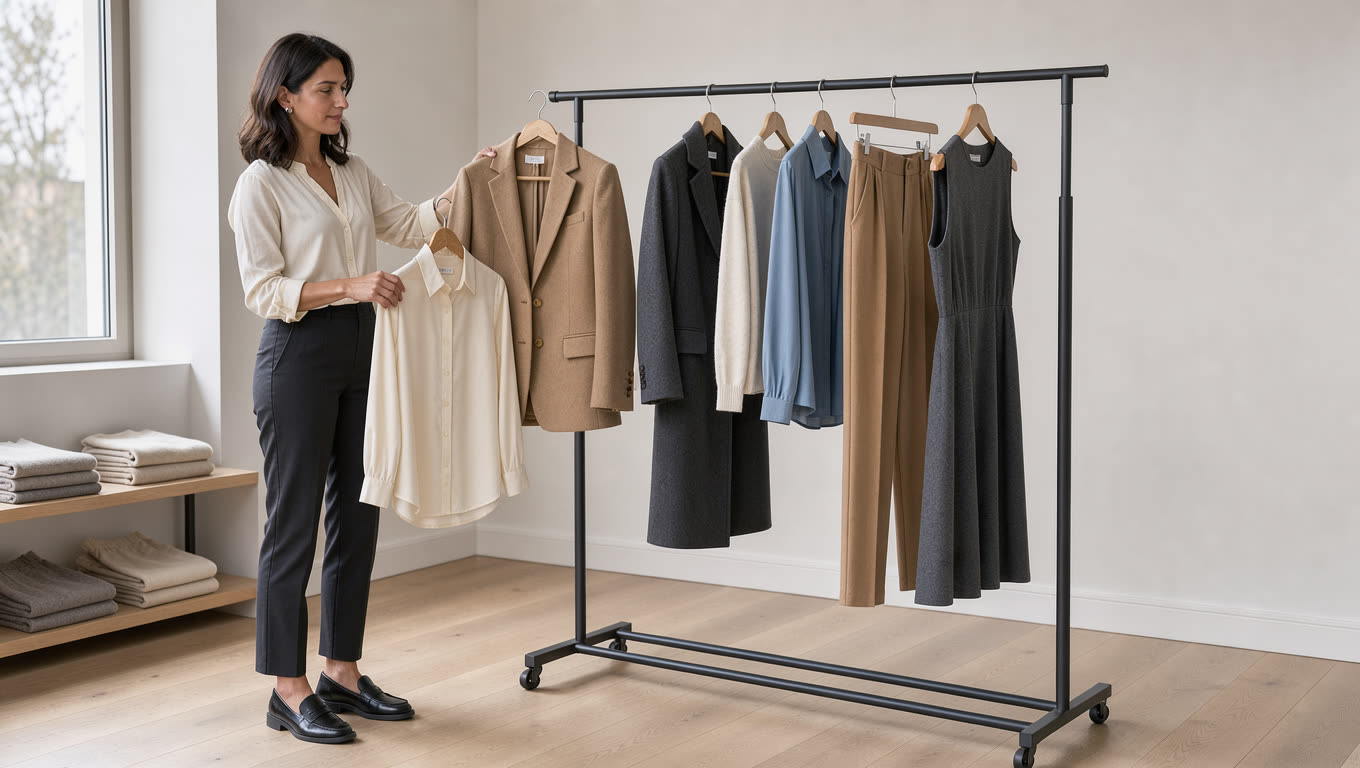
A personal styling and wardrobe consulting business helps clients understand what they already own, fill the real gaps in their closet and shop with intention instead of impulse. You can start it from home with no inventory, no storefront and no employees — just a laptop, a camera phone and a repeatable method. This guide shows you how to choose a niche, price your services, run paid e-styling sessions remotely, build referral partnerships with local boutiques and land your first clients in 2027.
The demand is not abstract. In a study of 5,643 consumers across France, Italy, Germany, the UK and the US, 84% said they had experienced the "got nothing to wear" feeling, and women reported it 21% more often than men. A wardrobe that finally works is something ordinary people will pay real money for.
Table of Contents
- Why Personal Styling Is a Real Business in 2027
- Choose Your Niche and Service Menu
- Set Your Rates: Hourly, Packages and Retainers
- Run E-Styling Sessions From Anywhere
- Partner With Local Boutiques
- Build Credibility With Certification and Proof
- Find Your First Clients
- Mistakes to Avoid
- Frequently Asked Questions
- Sources
Why Personal Styling Is a Real Business in 2027
Personal styling is a real business because remote style advice has become a mainstream retail category: Market.us forecasts the online personal styling services market to reach $14.38 billion by 2034, growing at 16.4% per year between 2025 and 2034, with North America holding a 35.1% share of that revenue. Your future clients are not luxury shoppers — they are ordinary women with full closets and no system.
The pain is measurable. WRAP, the UK charity that runs the largest clothing audit in the country, found that the average person owns 118 items of clothing and that 26% of them have not been worn in the past year — a total of 1.6 billion unworn garments hanging in UK wardrobes. Even occasion wear is stuck: 44% of skirts and 43% of dresses sit unused. People do not lack clothes; they lack a wardrobe that works, and that is exactly what you sell.
What makes 2027 different from 2015 is delivery. Styling no longer requires following a client through a mall: video calls, digital lookbooks and photo-based consultations let one person serve clients in several cities. The low overhead — no stock, no rent, no buying budget — means you can validate the business with your first ten clients before you quit anything.
Choose Your Niche and Service Menu
The fastest way to start is to pick one client, one problem and one outcome, then package it as a fixed menu instead of open-ended "styling help". Capsule wardrobe building, executive closet edits, wardrobe resets after a body or career change, and virtual styling for busy mothers are all proven entry points for a solo stylist.
A clean service menu removes buyer hesitation. A typical starter menu looks like this: a Capsule Wardrobe Session (a 30–40 piece wardrobe built from what the client owns plus a targeted shopping list), a Closet Edit (in-person or photo-based, with an organization plan), a Virtual Styling Session (a recorded video consult with outfit formulas), and a Seasonal Refresh (a quarterly add-on that turns one sale into recurring revenue).
The capsule offer is the strongest one to lead with, because it solves the exact problem the data shows: wardrobes are overstuffed and underused. Frame it as an outcome — "get dressed in under five minutes, with nothing unworn" — not as a list of activities you perform.
Set Your Rates: Hourly, Packages and Retainers
Charge by the hour, by package or on retainer, and start at the market floor rather than guessing: Thumbtack puts the national average for personal shoppers at $120–$200 per hour, while individual styling and shopping rates typically run $50–$200 per hour depending on location, reputation and experience. Published rate cards show how packages lift the ticket — four-hour closet-audit packages at $320 and eight-hour packages (audit, outfit planning and shopping) at $640.
Hourly work trades time for money, so the real leverage is in packages and retainers. Independent stylists publicly list full wardrobe edit packages at $3,900, seven-hour style refresh packages at $1,400 and ongoing styling support billed at $150–$200 per hour. A quarterly refresh retainer of a few hundred dollars, sold to ten clients, already outperforms one-off appointments.
One benchmark to keep you honest: ZipRecruiter reports the average US personal stylist salary at $43,797 per year in 2026, with most professionals landing between $34,000 and $50,000. That figure covers employed stylists who give away their margin to an employer — as the owner of your own consultancy you keep the full revenue, but it also warns you what happens when you price at entry level forever.
Run E-Styling Sessions From Anywhere
E-styling means you serve clients without meeting them: an intake form and photos come in, and a digital lookbook with outfit formulas, a shopping list and links goes out — all from your desk. This is not a niche experiment: Stitch Fix reported $1.35 billion in revenue for fiscal 2026, up 6.4%, with $592 of net revenue per active client across roughly 2.28 million active clients.
A simple remote workflow takes less than a week to build: a questionnaire (body measurements, lifestyle, budget, photos of the current closet), a 45-minute video consultation, then delivery of a lookbook — a branded PDF or slide deck showing each outfit with the exact pieces, plus links the client can buy directly. Follow up after two weeks to capture wins and testimonials, and sell the seasonal refresh from there.
Two practical rules make remote styling profitable. First, sell the outcome (a capsule, a packing list for a trip, a work wardrobe), not your time on a call. Second, disclose any affiliate links and prefer boutiques that pay a referral fee — it keeps you aligned with the client while adding a second revenue line on top of your fee.
Partner With Local Boutiques
Local boutiques are your fastest referral channel: you send them pre-qualified, pre-styled clients, and they reward you with commission, cross-referrals or content collaboration. The timing works in your favor — data from B2B platform JOOR shows independent fashion retailers' share of transaction volume rose from 49% to 62% over five years, and like-for-like indie retailers ordered 27% more in 2025 than in 2020 while enterprise retailers declined 4%.
Start with three to five boutiques that match your client's style and budget. Offer something concrete: a monthly "stylist hour" where you bring clients in-store, an agreed commission (10% is a common starting point — confirm it in writing), and social content featuring their pieces styled on your clients. In return you gain a physical showroom without rent and a partner who pushes your name to their best customers.
Keep the relationship honest. Always tell clients when you earn a commission, never recommend a piece you would not put in your own client's capsule, and track which boutique sends you inquiries — after two seasons the numbers tell you where to spend your time.
Build Credibility With Certification and Proof
Certification is not legally required to style anyone, but it shortens the trust gap when you pitch corporate clients and career-transition clients. The Association of Image Consultants International (AICI) runs a three-tier certification program for image consultants, and its Certified Image Consultant exam costs $310 for members — a modest investment compared with a full image consulting course.
If you skip certification, replace it with proof: five to ten documented before-and-after closet edits, client testimonials with photos, and a short style quiz on your site that captures emails. A portfolio of real transformations converts far better than a certificate on a wall, and it is free to produce.
Whatever credentials you claim, keep them current and specific. "Certified Image Consultant, AICI" or "trained in wardrobe consulting through [named institute]" reads honestly; vague claims of "international fashion expert" invite skepticism and cost you the tender.
Find Your First Clients
Your first clients come from demonstration and proximity: publish real wardrobe transformations, claim your Google Business Profile, and pitch the boutiques, hair salons and professional services firms your target client already visits. The wallet is already there — US women aged 16 and over spent an average of $632 on apparel in 2024, and all US consumer units spent $2,001 on apparel and services that year, so you are not creating demand, you are intercepting it.
Content is the compounding channel. Outfit boards and capsule videos perform naturally on Pinterest, where evergreen searches keep sending traffic long after a post — the same discipline behind a social media management studio. Pair that with a clear personal brand and one lead magnet, such as a free "10-piece capsule checklist".
Offline still works faster at the start: style one client for free or at cost in exchange for a testimonial and three referrals, attend boutique events, and collaborate with complementary businesses — a sustainable label such as the founders in Launching a Sustainable Fashion Brand on a Budget often has exactly your audience and no stylist.
Mistakes to Avoid
The most expensive mistake is scaling into a subscription box before demand is proven: Nordstrom acquired Trunk Club for $350 million in 2014, took a $197 million write-down and wound the brand down, closing its showrooms in 2020. You do not need inventory, boxes or venture capital to win — you need ten happy clients and a repeatable offer.
The second mistake is undercharging. When the average stylist salary sits at $43,797 a year, many talented women are effectively running a charity: they discount for friends, quote per hour instead of per outcome, and never raise prices after the first testimonials. Publish packages, raise them every time you are fully booked for a month, and stop selling single hours once you have three clients on retainer.
The third mistake is serving everyone. "Wardrobe help for women" is not a position; "capsule wardrobes for consultants returning from parental leave" is. Specificity sets your price, your content and your referral partners — and it is the one decision that makes every later decision easier.
Frequently Asked Questions
How much does it cost to start a personal styling business?
Very little: you sell time and judgment, not inventory. The realistic startup list is a domain and simple website, your local business registration, a smartphone with decent lighting, and a lookbook template — most of the rest is learning time. This low overhead is why stylists can validate the business with a handful of clients before investing further.
Do I need a certification to become a personal stylist?
No, certification is not legally required to charge clients for styling. Credentials from bodies such as the Association of Image Consultants International — a three-tier program whose Certified Image Consultant exam costs $310 for members — do shorten the trust gap, especially with corporate clients. If you skip it, compensate with documented before-and-after work and testimonials.
How much should a beginner stylist charge per hour?
Beginners commonly charge $50–$100 per hour, against a national average of $120–$200 per hour for personal shopping work, with published four-hour packages at $320 and eight-hour packages at $640. Price your first three clients at the lower end in exchange for testimonials, then move to package pricing as soon as demand allows.
How do I style clients remotely without meeting them?
You run an e-styling workflow: an intake questionnaire with photos and measurements, a video consultation, then a delivered lookbook of outfit formulas with a shopping list and purchase links. Remote styling has mainstream demand — Stitch Fix reported $1.35 billion of revenue in fiscal 2026 across roughly 2.28 million active clients — so the format is already accepted by the market.
How do I get my first paying client?
Start inside your network: offer one full wardrobe edit at a reduced rate in exchange for a testimonial and three referrals, then publish the transformation. Follow up with local boutiques — independent retailers now take a 62% share of JOOR's transaction volume and are actively looking for stylists who send them prepared clients.
Can I run a styling business part-time?
Yes — hourly sessions, photo-based closet edits and pre-recorded lookbooks all fit around a job, and you can schedule client work in evenings and weekends. The constraint is energy, not the model: pick one niche, keep a short menu, and raise prices until part-time hours produce full-time revenue.
Conclusion
Starting a personal styling and wardrobe consulting business in 2027 costs almost nothing but demands focus: one niche, a short menu of fixed-price packages, a remote e-styling workflow and two or three boutique partners who send you prepared clients. The market is growing at 16.4% a year, closets are measurably broken, and the average client already spends hundreds of dollars on clothes she does not wear.
Pick your niche today, style your first client this week, and let the testimonial — not the certificate — build your pipeline. The women who succeed in this business are not the best dressed in the room; they are the ones who ship the lookbook.
Sources
- Market.us — Online Personal Styling Services Market Size, Share & Growth Analysis 2025–2034 (16.4% CAGR, $14.38B by 2034, North America 35.1% share).
- Vestiaire Collective — "Got Nothing to Wear" research (5,643 respondents, five markets, 84% experienced the feeling) and WWD coverage of the study.
- WRAP — Citizen Insights: Clothing Longevity and Circular Business Models (118 items owned, 26% unworn, 1.6 billion unworn garments, 44% of skirts and 43% of dresses), 2022; BBC News coverage.
- ZipRecruiter — Personal Stylist Salary (US average $43,797 per year, $34,000–$50,000 range), 2026.
- Thumbtack — Wardrobe Consultant Cost and Personal Fashion Stylist pricing guides ($120–$200 national average, $320/$640 package examples).
- Wardrobe Editor — personal styling service pricing ($3,900 full wardrobe edit package), 2025.
- U.S. Bureau of Labor Statistics — Consumer Expenditures 2024 ($2,001 apparel and services per consumer unit; FRED series CXUWOMENSLB0101M: $632 apparel for women 16 and over).
- Stitch Fix — Fourth Quarter and Full Fiscal Year 2026 Financial Results ($1.35B revenue, $592 net revenue per active client).
- FashionNetwork — "Indie retailers thriving globally as share of orders grows" (JOOR data: 49% to 62% share, +27% like-for-like orders in 2025), 2026.
- AICI — Certification pages (three-tier program, Certified Image Consultant exam $310 for members).
- Retail Dive and CNBC — coverage of Trunk Club's shutdown ($350M acquisition, $197M write-down, showrooms closed 2020).