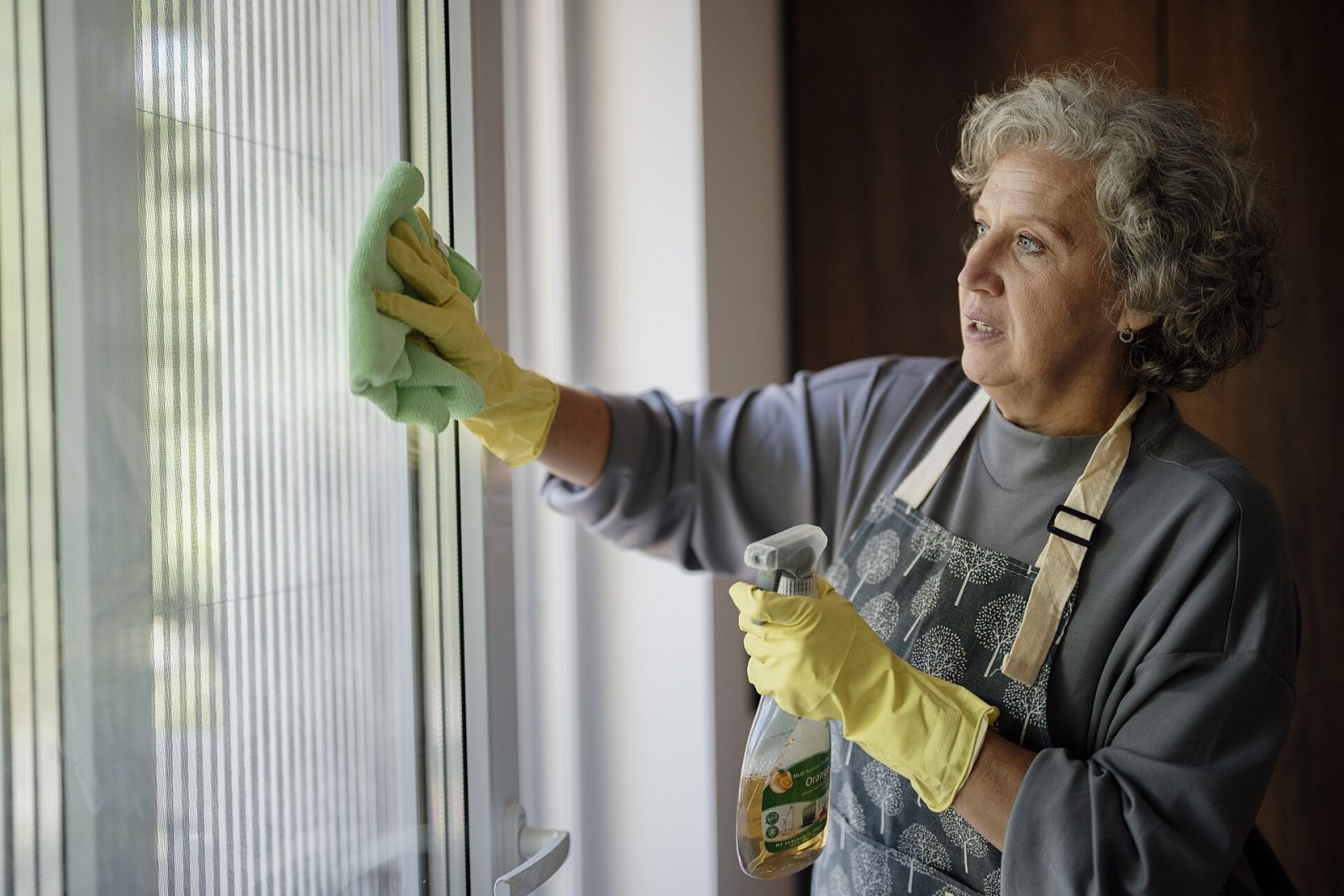
Window cleaning is one of the few service businesses you can start alone, with a few hundred dollars of tools, and be profitable on the first invoice. The national average residential visit runs about $221 according to Angi's 2026 cost data drawn from 25,969 verified projects — for two to three hours of work.
That ratio is why the trade keeps appearing on lists of low-investment businesses, and why so many operators quit after a season of $99 jobs. The cleaning is easy to learn; the business around it is not. Here is what decides whether yours survives: the equipment worth buying, the insurance property managers actually ask for, per-pane pricing, and the follow-up system that turns one-time customers into a route.
Table of Contents
- Why residential window cleaning still works as a first business
- Startup costs and the equipment that actually matters
- Legal setup, insurance and the safety math
- How to price residential jobs without leaving money on the glass
- Build a recurring route, not a pile of one-off jobs
- Where your first customers come from
- Hiring your first cleaner and making the math work
- Mistakes that quietly kill window cleaning margins
- Frequently Asked Questions
Why residential window cleaning still works as a first business
Residential window cleaning works because demand repeats, equipment is cheap, and the homeowner pays a full service price for a few hours of visible work. Angi's 2026 study puts the average visit at $221 with most homeowners paying $150 to $303, while Housecall Pro's 2026 price guide, built from quotes its users actually issue, reports whole-property interior-and-exterior work at $115 to $395 with a median of $228.
There is no inventory, no trade licence anywhere in the United States, and no premises to rent. A 25-window two-storey home takes a solo cleaner two and a half to three and a half hours and follows a fixed sequence: walk the exterior with the homeowner, wash and remove screens, clean exterior glass, clean interior glass, wipe tracks and sills, replace screens.
Be realistic about the failure mode. BLS Business Employment Dynamics data show 78.9% of establishments opened in the year to March 2025 were still operating in March 2026, so roughly one in five closed inside a year — and in this trade closures usually trace back to no price floor and no repeat schedule rather than a weak market.
Startup costs and the equipment that actually matters
You can start for roughly $1,200 including tools, business registration and the first insurance payment, and you do not need a van. A lean professional kit — two or three squeegees, a scrubber and sleeves, an extension pole, bucket-on-belt, scrapers, a 24-foot extension ladder with standoff, towels and solution — costs $600 to $1,000 from trade suppliers such as Ettore and Unger, both of which sell direct and have supplied professionals for decades.
The purchase that changes the business is the water-fed pole, and it is a first upgrade rather than a day-one buy. A carbon pole with a deionised-water tank runs $1,500 to $4,000, lets you clean second- and third-storey glass from the ground, and dries spot-free because pure water leaves no minerals. Gardiner Pole Systems is the reference supplier here. Test your tap water with an inexpensive TDS meter first: below about 100 ppm a simple DI tank is enough, while harder water burns through resin and needs a combined RO/DI cart.
Skip the wrapped van, the pressure washer and six sizes of everything. Money parked in unused equipment is money not spent on the photos and door hangers that produce your first ten customers.
Legal setup, insurance and the safety math
There is no window cleaning licence in any US state, so the legal work is ordinary small-business paperwork: a single-member LLC (typically $50 to $500 depending on state), a free EIN from the IRS, a city licence usually $25 to $150 a year, and a business bank account. Set up the Google Business Profile the same week, since verification can take one to two weeks.
Insurance is the credential that wins contracts. A $1 million per-occurrence, $2 million aggregate general liability policy has a median cost of $78 a month, about $931 a year, for window cleaning businesses quoting through Insureon; workers' compensation averages $114 a month and commercial auto $250. Realtors and property managers ask for a certificate before you touch their glass, and a solo operator without one loses those accounts by default.
Safety is the core operating risk, not a compliance box. OSHA reports 389 fatal falls to a lower level out of 1,034 construction fatalities in 2024, and ladders remain the most common access method in this trade. Never stand on the top two rungs, always use a standoff against the gutter, keep three points of contact, refuse wet or windy days above ground level, and move to a water-fed pole for anything above the second storey rather than stretching a ladder.
How to price residential jobs without leaving money on the glass
Price per pane, not per house. The 2026 market rate for a standard window cleaned inside and out is $8 to $16, or $4 to $8 exterior only, with picture and bay windows at $10 to $25 and skylights at $20 to $30. A 24-window two-storey home priced mid-range lands between $300 and $420, which is where a three-hour solo job belongs.
Two numbers protect the margin. First, a minimum job charge of $150 to $250, because a five-pane booking that consumes forty minutes of driving and setup pays less than minimum wage. Second, a target hourly rate of $75 to $125 including drive time; if a quote comes out at $45 an hour, the quote is wrong, not the market.
Sell add-ons as separate line items rather than absorbing them. Screen cleaning, track and sill detailing, and hard-water stain removal are worth $2 to $30 each and lift the average ticket from $220 to $320 on the same driveway. Recurring customers are also worth a discount: quarterly and semiannual contracts typically price 10% to 20% below one-time work, and they are the only version of this business that compounds.
Build a recurring route, not a pile of one-off jobs
A window cleaning business becomes stable when the same houses reappear twice a year. The arithmetic is simple: 200 homes cleaned twice a year at $320 is $128,000 of revenue with no ongoing marketing spend, because every customer is already in your phone.
Getting there is a system. Book the next visit before you pack up, put every customer on a six-month reminder in a tool such as Housecall Pro or Jobber, and keep the route geographically tight — five houses on one street are worth more than five spread across a county, because drive time is the one cost you cannot invoice.
Fill the winter gap deliberately. A storefront route of 40 stops billing $35 every two weeks is $3,000 a month of predictable revenue that takes about three mornings, and it keeps the lights on while residential demand is frozen.
Where your first customers come from
Your first ten customers will come from people who can already see your work. Clean your own house, photograph the before and after in the same light, post it in a neighbourhood group, and offer three nearby neighbours a first-visit rate so one street becomes one morning.
Reviews are the second engine. BrightLocal's 2026 Local Consumer Review Survey found 97% of consumers still use reviews to guide purchase decisions, and customers increasingly filter for 4.5 stars and recent reviews rather than volume — thirty recent reviews beat three hundred old ones. Ask in person, at the end of every job, while the glass is still wet.
Then work the nodes that control repeat spend. Realtors need windows cleaned before listings; property managers need it before move-ins; both keep a reliable cleaner on file for years. A one-page service sheet with your insurance certificate attached converts better than any ad.
Hiring your first cleaner and making the math work
Hire once you are consistently booked more than four days a week, because at that point you are the bottleneck rather than the sales engine. The benchmark wage is the BLS median for janitors and building cleaners, $17.71 an hour or $36,840 a year as of May 2025, plus 15% to 25% for payroll taxes and insurance and roughly $114 a month for workers' compensation.
The test is that a job must still clear your target hourly rate after paying the cleaner. A $320 house taking three hours at $20 an hour plus burden costs about $69 in labour, leaving room for the van, insurance and your selling time. What never works is hiring to service cheap jobs: a second person multiplies a bad price, it does not fix it.
Train on your method, not on speed. A cleaner who follows the same sequence produces results customers recognise, and consistency is what lets you hand over a route without losing the account.
Mistakes that quietly kill window cleaning margins
Businesses in this trade rarely fail at cleaning glass; they fail at the layer around it. The recurring mistakes are predictable: quoting from the driveway without counting panes and turning a $380 job into a $190 one; accepting every booking regardless of distance so a $150 job eats ninety minutes of driving; skipping the reminder system and guaranteeing a seasonal cliff; working without general liability and disqualifying yourself from the commercial accounts that stabilise the year; and treating interior glass as optional when it is the highest-margin line on the invoice.
Fix those five and the trade becomes one of the most forgiving businesses a woman can run solo: low capital, fast cash collection, no inventory, and customers who rebook themselves every six months if you simply ask.
Frequently Asked Questions
Do I need a licence to start a window cleaning business?
No US state requires a window cleaning licence. You need a general business registration, usually $25 to $150 a year from your city or county, a business entity such as an LLC, and general liability insurance — which is what clients actually ask to see.
How much can a solo window cleaner earn?
Solo operators typically gross $50,000 to $110,000 a year depending on route density and commercial work. Two to four houses a day at $220 to $320 each, four days a week, is roughly $90,000 to $120,000 before fuel and insurance.
What should I charge for my first job?
Charge the local market rate, not a discount rate: $8 to $16 per window inside and out, with a $150 minimum. A first-visit discount is acceptable as a one-street marketing decision, but starting cheap teaches customers that your price is negotiable, and it is hard to raise later.
Do I need a water-fed pole to start?
No. A squeegee, scrubber, extension pole and proper ladder cover first- and second-storey residential work for under $1,000. Buy the water-fed pole once you are regularly turning down higher windows or need to work above the second storey safely.
How do I get recurring commercial accounts?
Walk into independent storefronts, salons, dental offices and car dealerships with a one-page service sheet and your insurance certificate, and offer a free demonstration pane. Commercial buyers weigh reliability and proof of insurance above price, which makes a $25 to $60 biweekly visit an easier sale than a $300 house.
Is window cleaning realistic for a solo woman operator?
Yes. The work is lifting, reaching and repetition rather than heavy load, and the physical demands are often overstated. The real constraint is ladder discipline: use a standoff, stay off the top rungs, and switch to a water-fed pole above the second storey — that choice removes most of the risk.
Conclusion
Residential window cleaning rewards the two things first-time founders find least exciting: a price floor and a follow-up calendar. Buy about $1,000 of professional tools, register the business, put general liability in place before the first invoice, and price by the pane with a $150 minimum. Then build the route one street at a time and book the next visit before you leave the driveway.
Do that and the same 200 houses that would have paid you once become a six-figure business with almost no marketing spend. To compare this trade with a broader cleaning model, our guide to starting a home cleaning business covers the recurring-revenue side in more depth, and our article on property management for small landlords explains how to reach the managers who control repeat contracts.
Sources
- Angi, How Much Does Window Cleaning Cost? [2026 Data] — national average $221 per visit from 25,969 verified projects; per-pane ranges; recurring discounts of 10–20%.
- Housecall Pro, How Much to Charge for Window Cleaning: 2026 Price Guide — whole-property $115–$395 (median $228); exterior-only $96–$285; $8–$16 per window inside and out.
- Restart, How to Start a Window-Cleaning Business (2026 Guide) — lean kit around $1,200; 25-window two-storey job at 2.5–3.5 hours solo; 200 homes twice yearly at $320; storefront route economics.
- Insureon, How much does window cleaning insurance cost? — general liability median $78/month ($931/year); workers' comp $114/month; commercial auto $250/month.
- U.S. Bureau of Labor Statistics, Occupational Outlook Handbook: Janitors and Building Cleaners — May 2025 median pay $36,840 per year, $17.71 per hour.
- U.S. Bureau of Labor Statistics, Business Employment Dynamics, Table 7 — 78.9% of establishments opened in the year to March 2025 were still operating in March 2026.
- OSHA, Fall Prevention Campaign — 389 fatal falls to a lower level out of 1,034 construction fatalities in 2024 (BLS data).
- BrightLocal, Local Consumer Review Survey 2026 — 97% of consumers use reviews to guide purchase decisions.