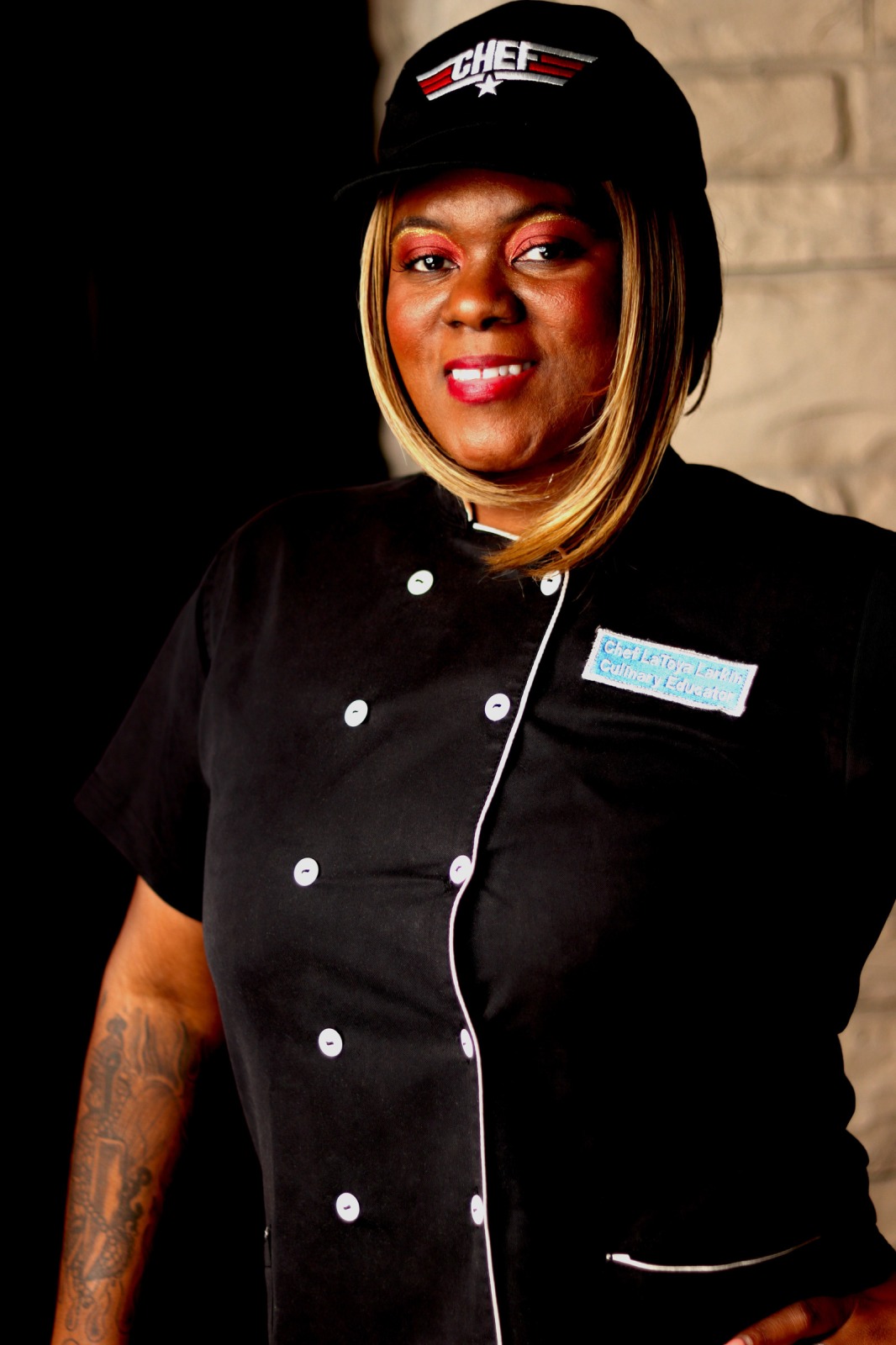
Catharine Montgomery built Better Together Agency on a premise that sounds simple and turns out to be radical: communications work should advance equity, not just outcomes. A Black woman founder with more than 15 years in public relations and crisis communications, she turned a firm serving nonprofits and advocacy groups into an AI-forward communications agency — then went further, becoming the first communications agency founder to publish an annual bias audit of generative AI.
Her journey runs from leaving a job over racism in the workplace, to pioneering consumer research on AI bias, to building TogetherAI, a private, bias-aware platform for purpose-driven organizations.
Table of Contents
- From Communications to a Calling
- The First AI Bias Audit by a PR Agency
- What the Numbers Reveal About AI Bias
- TogetherAI: Technology That Knows Its Users
- Recognition and a Seat at the Table
- Lessons for Women Founders
- Frequently Asked Questions
From Communications to a Calling
Catharine Montgomery holds a B.S. in Public Relations and Marketing from Auburn University and an MBA from the University of Maryland's Robert H. Smith School of Business. She spent her early career in-house and at agencies on education, environmental justice, healthcare access and voting rights campaigns — work that changed perceptions and, at times, behavior.
She founded Better Together after a painful rupture. In a 2023 Bizwomen profile, Montgomery explained she had to leave a previous job because of a racist employee. That experience, she said, fueled her determination to build a socially responsible business. The agency's About page puts it plainly: she founded the firm "after facing racism and systemic barriers in her career" to help organizations communicate honestly with the communities they serve.
Today the agency is based in Washington, D.C., with a remote team serving corporations, nonprofits and advocacy organizations nationwide. Its services span brand strategy, media relations, content development and stakeholder engagement — every engagement carrying the same throughline: communications as a tool for change.
The First AI Bias Audit by a PR Agency
Montgomery's pivot into AI ethics started with a question, not a technology. When generative AI began appearing in client workflows, she did not ask "how do we use this?" She asked, "Who does this leave out?"
That question produced the first bias audit of generative AI conducted by a public relations agency, published as the Insight Report: Navigating Biases in Generative AI. The findings were uncomfortable: the tools repeated systemic inequities in the language they generated, the images they produced and the communities they centered — or omitted. Two examples she recounts publicly capture it. Requesting an AI-generated image of Maya Angelou, she received an older white woman. Adapting a radio script for a Black audience, the tool resorted to stereotypical, offensive language.
The response was not uniformly warm. Some peers questioned her methodology in ways that felt less like curiosity than a need for her to be wrong; others went quiet. She kept going, joining a fellowship at the Center for AI and Digital Policy (CAIDP) to learn AI governance from the ground up — the actual policy frameworks, not the talking points.
What the Numbers Reveal About AI Bias
Montgomery's annual Biases in Generative AI Survey has become the agency's signature research — and, according to the firm, the first consumer-focused study of its kind by a communications agency. The numbers give weight to the anecdotes.
The 2024 survey found that only 77.24% of respondents were aware of what generative AI is, a gap that shapes how people perceive bias and fairness. It documented biases spanning racial and gender prejudices to socio-economic and age-related disparities.
The 2025 edition surveyed 1,010 U.S. adults aged 18 or older. About one in three (33%) said they would consider stopping their use of a generative AI tool they perceived as biased, and 92% said companies must address generative AI bias. Fairness and lack of bias ranked behind only accuracy and reliability in what respondents valued. Montgomery draws the line carefully: the 92% measures expectation, not observed churn — refusing to inflate a number is part of the method.
A third annual survey, Building Consumer Trust: Addressing Bias in Generative AI for Brands, tracks where consumer trust is shifting and where brands are losing ground. For her, the business case and the ethical case are the same case: when consumers notice AI content does not reflect them, trust in the brand behind it erodes.
TogetherAI: Technology That Knows Its Users
Research showed what was wrong; TogetherAI was her answer. The private, bias-aware platform is built for purpose-driven campaigns, and its design follows her findings. Rather than generic training data, it generates outputs from an organization's own messaging, data and annual reports, supports models from OpenAI, Anthropic and Meta, and never uses client data to train the underlying models.
The motivation came from the organizations she serves. Nonprofits, advocacy groups and social impact brands needed a tool that knew them, not a generic assistant to retrain constantly. One illustration: a small nonprofit serving communities of color on environmental health had a powerful story but almost no communications capacity. After adopting AI tools responsibly — with training, on their own data — the team moved from routine content to strategy and community relationships. Its executive director told her, "For the first time, I feel like we can actually keep up."
She also trains leaders through programs like Building an AI-First Organization, including Ragan Training's February 2026 session on communications prompts. For related coverage, see Dale Nirvani Pfeifer: From Hashtag Donations to AI-Powered Philanthropy and Angie Madara: Pioneering Tech Empowerment and Social Impact.
Recognition and a Seat at the Table
Her work spans the communications industry and the AI policy world. She is a 2023 Vital Voices Fellow (VV Visionaries); her awards include Ragan's Top Women in Communications Award and Social Impact Award, PRNEWS People of the Year recognition among "The New Entrepreneurs on the Block," and PRNEWS Top Women Innovators. In 2024 she was a finalist in the 21st Annual Stevie® Awards for Women in Business; in 2026, Better Together Agency itself was a Stevie® finalist for Most Innovative Company of the Year.
What she does with that platform matters as much as the awards. Montgomery has spoken about the cost of shrinking in professional spaces — women with something real to say, measuring every word against the risk of how it lands. Her answer is a movement she proposes deliberately: Nothing About Us Without Us in AI, borrowed from disability rights organizing. No AI system making decisions about a community should be designed, deployed or governed without meaningful participation from that community.
Lessons for Women Founders
Your perspective is the credential. She did not arrive in AI from computer science; she arrived from communications, advocacy and communities on the wrong end of systems not built for them. That made her a better practitioner, not a lesser one.
Do the work before you do the talking. Better Together did not announce that it cared about AI bias; it studied, documented and published it. Credibility in a contested space comes from showing your work.
Don't wait for permission to lead. No one invited her into AI ethics conversations. She created the research, built the tools and showed up: if you see a gap, fill it.
Stay grounded in why. A mentor — a Black woman who spent decades in communications leadership when there were very few — told her: "The room will tell you who belongs in it. Don't listen." When Montgomery called her before launching, second-guessing the timing and the market, the mentor asked one question: "Who else is going to do this work the way you would do it?" She had no answer. "Exactly. So go."
For more on building around conviction, see 6 Steps to Building a Strong Personal Brand as a Female Founder.
Frequently Asked Questions
Who is Catharine Montgomery?
Catharine Montgomery, MBA, is the Founder and CEO of Better Together Agency, a Black woman-founded, AI-forward communications firm based in Washington, D.C. She has more than 15 years of experience in public relations and crisis communications and is a fellow of the Center for AI and Digital Policy (CAIDP).
What is Better Together Agency?
It is a public relations and marketing firm that helps companies, nonprofits and advocacy groups plan communications, reach audiences and support social change. Montgomery founded it after experiencing racism and systemic barriers in her career, combining communications strategy with responsible AI to advance equity.
What is the Biases in Generative AI Survey?
It is Better Together Agency's annual research study on bias in generative AI, described as the first consumer-focused study of its kind by a communications agency. The 2025 edition surveyed 1,010 U.S. adults; the 2024 edition was published as the Insight Report: Navigating Biases in Generative AI.
What did the 2025 AI bias survey find?
Among 1,010 U.S. adults, about one in three said they might stop using a product if its generative AI showed bias, and 92% said companies must address it. Fairness and lack of bias ranked behind only accuracy and reliability. These are stated views and expectations, not measured revenue loss.
What is TogetherAI?
TogetherAI is a private, bias-aware AI platform built by Montgomery for purpose-driven campaigns. It generates outputs from an organization's own messaging, data and annual reports rather than generic training data, supports OpenAI, Anthropic and Meta models, and never uses client data to train the underlying models.
What awards has Catharine Montgomery received?
Her recognition includes Ragan's Top Women in Communications Award and the Social Impact Award, PRNEWS People of the Year and Top Women Innovators honors, and Stevie® Awards for Women in Business recognition — a 2024 individual finalist and, with her agency, a 2026 finalist for Most Innovative Company of the Year.
Conclusion
Catharine Montgomery's story is not a pivot story but a consistency story. The communicator who spent her career asking who gets heard carried that question into a new domain — then did the research, built the product and published the numbers rather than waiting for permission. For women founders, the lesson is that expertise built in one industry becomes leverage in the next, that evidence beats announcements, and that the gap you see is an invitation.
Sources
- The Better Together Agency — About Us (founder's story, 2026 Stevie® finalist)
- The Better Together Agency — 2025 Biases in Generative AI Survey (1,010 U.S. adults; one in three; 92%)
- Building Creative Machines — Interview: Catharine Montgomery (September 22, 2026; 33% and 92%)
- Authority Magazine — Catharine Montgomery on the Future of AI (March 26, 2026; CAIDP, TogetherAI)
- Bizwomen — In Her Own Words: Catharine Montgomery (October 17, 2023)
- MarTech Cube / PRNewswire — Biases in Generative AI survey (April 16, 2024; 77.24%, Maya Angelou example)
- Vital Voices — Catharine Montgomery, 2023 Fellow
- PR Daily — Catharine Montgomery speaker profile (awards, education)
- PR Newswire — Stevie® Awards for Women in Business finalist (September 30, 2024)