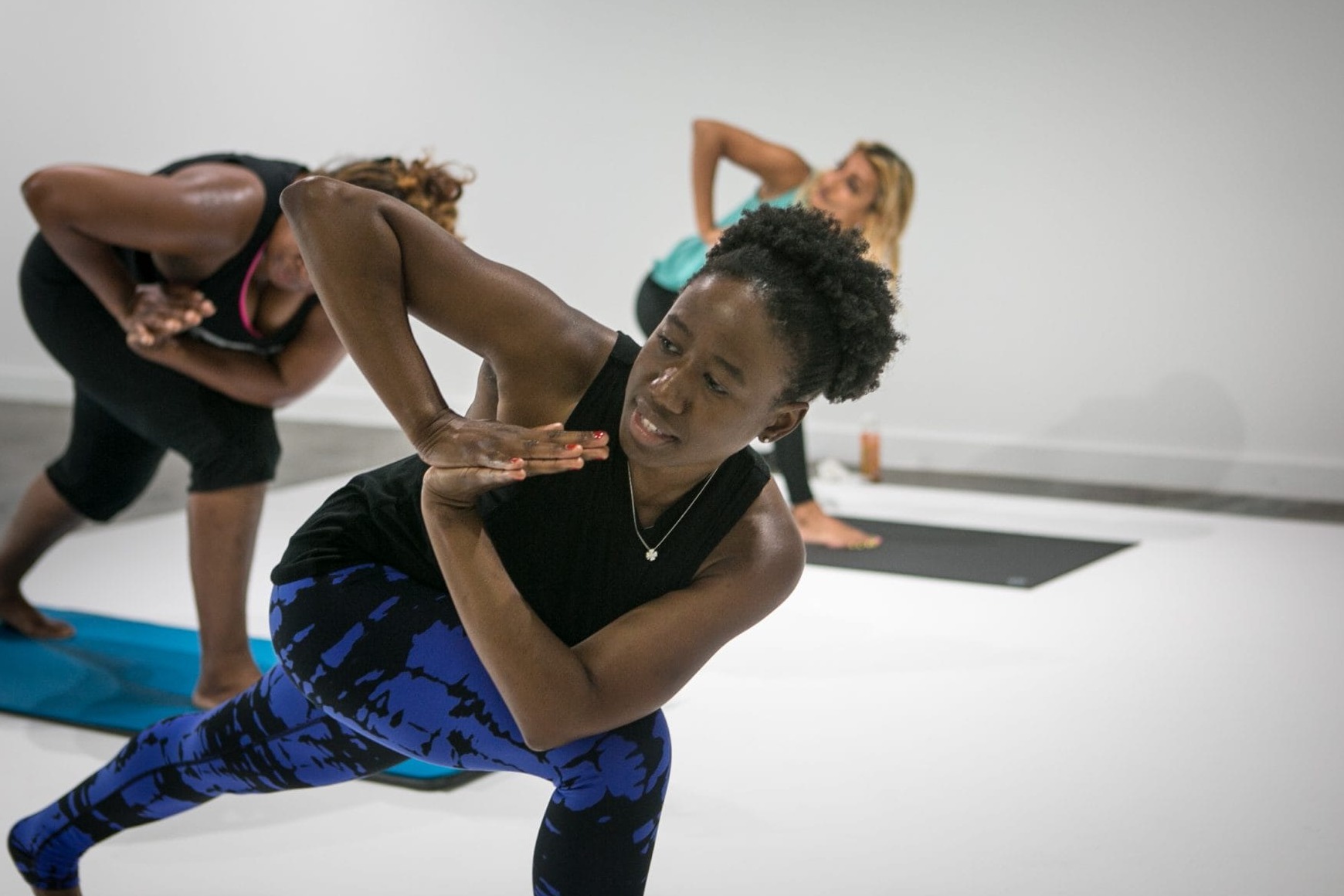
Most fitness businesses sell intensity. Ivory Howard sells repetition. A certified yoga and Pilates instructor with a Master of Public Health, Howard launched Flat Belly Pilates in Atlanta in September 2015 as a mobile studio that brought private classes to clients' homes and offices, then rebuilt it as a virtual program for busy professional women after moving to Washington, DC. Her promise is deliberately unglamorous: the workout you will actually repeat beats the perfect plan you abandon in February.
Table of Contents
- From a Public Health Degree to a Mobile Pilates Studio
- Why She Built a Business for Women Who Felt Unwelcome in Studios
- How the Pricing Model Changed: From $70 Sessions to a 90-Day Program
- Free Classes as a Growth Engine
- What the Data Says About the Market She Sells Into
- Going Virtual: From a Local Studio to a National Program
- The Plant-Based Nutrition Piece of the Business
- Lessons for Founders Who Want to Follow the Same Path
- Frequently Asked Questions
- Conclusion
- Sources
From a Public Health Degree to a Mobile Pilates Studio
Howard came to fitness through public health rather than marketing. Her Master of Public Health gave her a population-level view of preventable disease, and her advanced training in plant-based nutrition gave her a second lever that most trainers never touch. When she opened Flat Belly Pilates in September 2015, she was not selling a studio membership. She was selling the removal of friction.
The original model was a mobile personal training studio: an instructor arrives at your home or office, at the hour you choose, with a mat and a plan. In an interview with Voyage ATL a year after launch, she described the offer as "studio results in the comfort and convenience of your home or office," with cues and hands-on adjustments for complete beginners as well as advanced students.
Pricing at that stage was session-based: singles from $70, duets from $90, packages from $325. It was an honest model for a solo operator, and it carried the ceiling every service founder eventually hits. Every dollar depended on an hour of her calendar, so the business could only grow as fast as she could drive across Atlanta.
Why She Built a Business for Women Who Felt Unwelcome in Studios
The niche came from a student's confession, not a strategy workshop. A client told Howard that she drove from Alexandria, Virginia into Washington, DC for class because she did not believe that she, as a person of color, fit in at the studios closer to her home.
Howard's own entry into yoga had the same shape. As a beginner she found almost no images of practitioners who looked like her or shared her body type, and the same narrowness followed her into teacher training. Her read was commercial as much as ethical: a large group of women had been quietly sized out of the practice, and nobody was serving them. Her classes are built for women who are not "skinny-skinny," who have curves, cellulite and bellies, and who want a room where that is unremarkable.
The public data backs the thesis. According to the National Center for Health Statistics, 16.9% of American adults practiced yoga in the previous 12 months in 2022, but the rate was 23.3% among women against 10.3% among men, 12.6% among Black adults against 19.3% among White adults, and 10.4% among adults below 200% of the federal poverty level against 23.0% at 400% or more. Access, not interest, is the constraint.
How the Pricing Model Changed: From $70 Sessions to a 90-Day Program
Howard moved from selling hours to selling outcomes, the single most important shift a service business can make. By 2022 she offered a four-week virtual Pilates program at $998, a health-planning intensive at $298, and permanent access to three recorded classes for $28.
The logic is easy to miss if you only read the headline number. A $70 session pays for sixty minutes of attention once. A $998 program pays for a month of structure, delivered to several clients in the same hours, and it can be repeated. The $28 bundle sits at the other end of the same ladder: a low-risk entry product that lets a curious woman sample her teaching, and a passive product that earns money while she sleeps.
By 2023 the offer had consolidated into a 90-day program built around one promise: establish a consistent practice and reclaim your health without starting over every Monday. Howard calls it a proprietary sequence, which matters for defensibility. Generic "yoga classes" compete with every studio and every free channel; a named, sequenced, time-bound program gives the client a finish line.
Free Classes as a Growth Engine
Her most effective marketing campaign cost almost nothing. Howard built a series of free yoga classes, found a venue at no cost, had flyers printed for free through a partner, and convinced local businesses to donate prizes so the events felt worth attending.
The results showed up in the metrics that matter to a small studio: her email list doubled, her search ranking improved, and she reached women who would never have clicked a paid ad from an instructor they had never met. The series also gave her something to pitch, and pitching is how she ended up quoted in US News and World Report, Health Digest, Fit & Well, Weight Watchers, The Zoe Report and Sisters from AARP, alongside local features in Voyage LA, Voyage ATL and Shoutout LA.
That is the step most solo founders skip. Howard treats press as distribution rather than a vanity metric, and she is blunt about the internal obstacle. Her advice to her younger self is to stop worrying about whether the work looks polished and start sharing it with potential clients. Waiting for a perfect website is the most expensive habit in the wellness industry.
What the Data Says About the Market She Sells Into
The category is large and still expanding faster than the population. Yoga Alliance found that 38.4 million Americans practiced yoga in 2022, up from 36.7 million in 2016, a 4.6% increase during a period when the total US population grew 2.7%. The same research estimated that practitioners spent more than $21 billion on yoga in the United States in 2022, with drop-in classes, mats and lifestyle products leading the list. Teachers surveyed named the lack of diversity as a recognized industry problem and said they wanted to be part of the solution, which is precisely the gap Howard monetized.
The ownership picture around her is equally instructive. Wells Fargo's 2026 Impact of Women-Owned Businesses report estimates that women own 15.7 million US businesses, or 40.6% of all firms, employing 12.6 million people and generating $2.8 trillion in revenue. Only about 9% of those businesses have employees, yet that small group produces roughly 82% of the revenue. A one-instructor studio that turns its method into a program, a newsletter and recorded classes is exactly the kind of business that crosses that line.
Going Virtual: From a Local Studio to a National Program
Going virtual was not a pandemic improvisation for Howard; she was streaming classes by 2016. In her Voyage ATL interview that year she explained that online classes let clients keep working out between appointments or while traveling, and let people outside Atlanta train with her at all. The technology extended the original promise, which was to remove every excuse except the real one.
By 2023 Howard was based in Washington, DC, selling the 90-day program remotely and publishing a newsletter, "Yoga and Pilates with Ivory Howard," to keep clients accountable between sessions. The studio had become a location-independent practice with one brand across Instagram, YouTube, TikTok and Threads. A business tied to one city has a market of people who can physically reach it; a business delivered over video has a market of everyone who can hold a mat in front of a screen.
The Plant-Based Nutrition Piece of the Business
Howard sells movement, but she frames health as a package that includes food. Her public health training and plant-based nutrition certification sit behind her client education, and she argues that exercise combined with a plant-based diet can prevent many chronic lifestyle diseases. Women already living with a chronic condition get a different message: it is not hopeless, and a long, active life is still available.
What is worth copying is the discipline around the claim. Howard keeps the boundary between coaching and medicine explicit, and her published material carries a disclaimer that it is not a substitute for professional medical advice or treatment. In a category full of instructors who drift into prescribing, that restraint protects both her clients and her business. She also refuses the all-or-nothing framing that stalls beginners: movement can be twenty minutes of stretching, a brisk walk, a class, or a ten-minute session between meetings.
Lessons for Founders Who Want to Follow the Same Path
Howard's operating advice is unusually concrete for a wellness business, and three themes recur across her interviews. The first is network. Friends and family will support you, she says, but they may not be able to support you the way the business needs, which is why a circle of entrepreneurs who refer clients and collaborate is not a luxury. Founders assembling that circle can start with practical groundwork such as the funding options available to female founders.
The second is size of task: a large project looks impossible until it is cut into pieces small enough to finish this week. The third is speed. Her advice to beginners is to stop thinking, stop planning, stop researching and take action, because the clarity people wait for only appears after the first move. It is the argument she makes about fitness, applied to business. Underneath all three is the habit that doubles as proof of concept: she starts her day with a workout, so the commitment happens before other priorities push it aside. Readers working on that muscle may find three mindset shifts for ambitious female entrepreneurs a useful companion.
Frequently Asked Questions
What is Flat Belly Pilates?
The studio Ivory Howard founded in Atlanta in September 2015. It began as a mobile business delivering private yoga and Pilates classes to homes and offices, and now runs as a virtual program for busy professional women from Washington, DC.
Who does Ivory Howard work with?
Busy professional women who struggle to work out consistently, plus women who felt unwelcome in traditional studios because of their body type or background, a gap she experienced herself as a beginner.
How much do her classes and programs cost?
In 2016 a private session started at $70, a duet at $90 and packages at $325. By 2022 she sold a four-week virtual program at $998, a $298 intensive and a $28 recorded class bundle. Current pricing should be confirmed on her site.
What credentials does Ivory Howard hold?
She is a certified yoga and Pilates instructor, holds a Master of Public Health, and has advanced training in plant-based nutrition. That mix is why her content combines movement instruction with preventive-health education.
Where is she based and does she teach in person?
Howard is based in Washington, DC, after starting the business in Atlanta. Her current offer centers on virtual sessions and programs, which lets her work with clients well beyond both cities, plus recorded classes clients stream anytime.
What can other founders learn from her business?
Three moves: she chose a niche defined by an access gap rather than geography, replaced hourly sessions with packaged programs and low-cost digital products, and built an owned audience through free events, a newsletter and press instead of paid ads.
Conclusion
Ivory Howard did not build a wellness empire, and she does not describe her work that way. She built a durable practice by noticing what the industry preferred not to see: thousands of women wanted the discipline of yoga and Pilates and had been quietly told, by the shape of the classes and the bodies in the photos, that it was not for them. Her answer was a business that meets clients where they are, prices the outcome instead of the hour, and treats consistency as the product.
That combination carried Flat Belly Pilates from an Atlanta mobile studio in 2015 to a virtual program serving women across time zones. For founders in any service category, the takeaway is not the mat. It is the discipline of serving a customer the market ignored, and then showing up for her every week.
Sources
- Elgaddal N, Weeks JD. Yoga Among Adults Age 18 and Older: United States, 2022. NCHS Data Brief No. 501, National Center for Health Statistics, June 2024. cdc.gov
- Yoga Alliance. Yoga in the World: Executive Summary, 2023 (survey fielded October 2022). yogaalliance.org
- Wells Fargo. 2026 Impact of Women-Owned Businesses Report. smallbusinessresources.wf.com
- Voyage ATL. "Meet Certified Pilates and Yoga Instructor: Ivory Howard," October 29, 2016. voyageatl.com
- Voyage LA. "Daily Inspiration: Meet Ivory Howard," May 25, 2022. voyagela.com
- Shoutout LA. "Meet Ivory Howard, Yoga and Pilates Instructor," September 2023. shoutoutla.com
- Bold Journey. "Meet Ivory Howard," July 25, 2023. boldjourney.com
- IdeaMensch. "Ivory Howard - Yoga Instructor," May 6, 2024. ideamensch.com