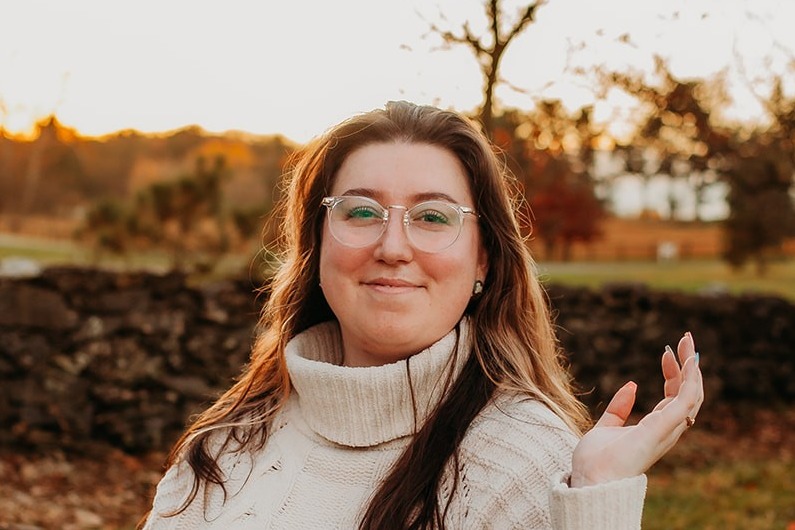
Valentina Grandesso did not set out to become an AI visibility consultant. She set out to write copy for healers, coaches and sustainable brands — the founders she describes as the people who "chose an Alternative to life script." Four years later, the studio she founded in Dubai in 2022 has become an SEO and generative engine optimisation consultancy with clients across the UAE, the United States and Europe, and its work is judged less by keyword rankings than by whether a brand gets quoted inside a ChatGPT answer.
Her arc — Milan to Dubai, luxury jewellery launches to freelance copywriting, keywords to citations — tracks one of the biggest shifts in how customers find businesses online. It is also a rare case study in repositioning before the market forces you to.
Table of Contents
- Why AI visibility became the new SEO
- From Milan to Dubai's luxury event floors
- The Costa Rica pivot
- Building The Alternative Copy Studio
- The shift from keywords to AI citations
- What she teaches founders about clients and values
- A practical AI visibility checklist
- Frequently Asked Questions
Why AI visibility became the new SEO
AI visibility matters because buying decisions increasingly start inside a chatbot answer instead of a results page. The numbers are blunt. Pew Research Center analysed 68,879 Google searches made by 900 U.S. adults in March 2025 and found that users who encountered an AI-generated summary clicked a traditional search result in 8% of visits, against 15% when no summary appeared (Pew Research Center, 2025). Clicks on the sources cited inside the summary itself happened in just 1% of visits to those pages.
That does not mean traffic is dying. It means traffic is being filtered through an answer layer that most small businesses still do not measure. Semrush tracked billions of visits across more than 50,000 websites and 17 industries and found that AI-referred traffic grew 66.02% in 2025, from 462 million to 767 million monthly visits, while organic search still carried 16.04% of all traffic and grew just 2.38% (Semrush, 2026). AI referrals remain a sliver of the whole, but they are the fastest-growing channel on the web — and the one that decides which brands get named out loud.
The stakes for founders are simple: if your competitor is cited and you are not, the customer hears one name, not two.
From Milan to Dubai's luxury event floors
Grandesso's route into marketing ran backwards through everything she said she would never do. Born in Milan in 1990, she ruled out a marketing and communications degree because it looked like the easy option, and graduated in economics instead. A few months later she was in a glossy corporate office in Dubai, running events and project management for the luxury industry — high-end jewellery brands, collections launches, VIP experiences.
By her own account, the work was polished and the life looked complete, and both felt hollow. In an interview with Bold Journey, she describes sitting in traffic one morning, latte in hand, organising yet another VIP launch, and asking herself whether she would be replaced by the afternoon. She concluded she would be. The realisation was less dramatic than it sounds: she wanted her work to move something for someone, not to ensure the roses matched a specific shade of pink.
The Costa Rica pivot
In 2020, she and her partner took a sabbatical that turned into a rewrite. They travelled through Workaway, exchanging work for stays, and landed in Costa Rica while the world was paused. What she found there was a slower definition of success than the hustle culture she had absorbed in Dubai.
She came back to Dubai in 2021 and left the corporate track. The first months were not a clean launch story: she has described trial, error and a few breakdowns. Then emails she wrote for one small sustainable business started converting unusually well, and the pattern became obvious to her — copywriting was a lever for businesses whose mission was to help people, animals or the planet. That insight, not a business plan, became the studio.
Building The Alternative Copy Studio
The Alternative Copy Studio opened in Dubai in 2022 with a motto she still uses: "In a world of cliché, be an Alternative." The early service list was a classic freelance stack — website copy, email marketing, copywriting mentorship for junior writers, and strategy sessions for clients who wanted something customised.
What distinguished it was how she chose clients. Instead of narrowing by industry or company size, she niched by values: coaches, healers, purpose-driven personal brands and small sustainable businesses. In her Bold Journey interview she lists the tests she applies — values alignment, a clear mission, authenticity, a collaborative spirit, and a commitment to sustainability. By 2024, she told IdeaMensch, the studio had become a fully booked business, built largely on referrals and community rather than paid acquisition.
That choice of niche is also a pricing and retention strategy. When a client's mission is legible, the copywriter can argue about positioning instead of haggling over word rates, and renewals follow the results rather than the invoice.
The shift from keywords to AI citations
Grandesso's second repositioning is the one worth studying. As Google got better at summarising and chatbots began answering before anyone clicked, she rebuilt the studio around generative engine optimisation and answer engine optimisation — GEO and AEO, in the shorthand — rather than copywriting alone. Her current pitch is narrow and measurable: get found on Google and cited by AI tools such as ChatGPT, Perplexity and Google's AI Overviews, so that content actually produces enquiries. She now works between Dubai, Bali and Milan, with clients in the UAE, US and Europe.
The timing reflects how the plumbing works. Semrush's clickstream analysis found that ChatGPT switched on its live web search for only 34.5% of queries as of February 2026, down from 46% in late 2024 (Semrush, 2026). Most answers, in other words, are assembled from what a model already "knows" about your brand. Reputation, published expertise and third-party mentions stop being soft assets and start being the inventory an AI draws from.
Pew's data explains why that matters commercially even when clicks fall: 88% of the AI summaries in its study cited three or more sources (Pew Research Center, 2025). Models are not improvising — they are selecting among documents they trust. The practical question for a founder is no longer "do I rank?" but "am I one of the documents that gets selected?"
Her positioning also carries a constraint that most agencies avoid writing down. On the studio's about page she commits to transparency rather than promises: if something is not moving the needle, she says so and recommends an alternative. That is a harder sell in a market where vendors compete on guaranteed first-page rankings, and it is precisely the promise an AI-era consultant cannot keep, because no one controls what a model decides to quote.
What she teaches founders about clients and values
Grandesso is unusually candid about the commercial cost of misaligned work. Her worst project, as she tells it, was a real estate client who paid the full fee upfront, then questioned every sentence and demanded endless revisions. She refunded the money and walked away. The lesson she draws is not about difficult clients in general, but about the deals taken purely for cash: if the work does not excite her and does not match her values, she now treats the outcome as predictable.
Three other habits recur in her interviews. She leans on community over isolation — masterminds, mentors, peers — and repeats the line that if you are the smartest person in the room, it is time to change rooms. She protects a working rhythm rather than a working volume: an 8:30 start, a gratitude meditation, deep work in cafés, noise-cancelling headphones, a hard stop at 8pm. And she argues against being universally liked, telling IdeaMensch that "being everyone's darling is overrated" and that a polarising, specific voice attracts the right clients faster than a diplomatic one attracts everyone.
None of this is unique advice. What makes it credible is that she applied it to a service business in a market — SEO content — that has been disrupted twice in three years, and used it to move up the value chain instead of defending a shrinking one.
A practical AI visibility checklist
Founders who want to copy the model can start with the mechanics rather than the positioning. Five moves do most of the work.
Answer first, explain second. Lead every section with the direct answer to the question in its heading, then support it. The structure matches how summaries are assembled, and it is the pattern that gets extracted.
Publish numbers you can defend. Original data, dated statistics and named sources are what make a page quotable. Using a statistic without a source is the fastest way to be skipped by both editors and models.
Make the entity unambiguous. One consistent name, one clear founder biography, one canonical domain. Models resolve brands as entities; conflicting profiles split the signal.
Be present where citations come from. Pew found that Wikipedia, YouTube and Reddit together accounted for 15% of the sources listed in AI summaries (Pew Research Center, 2025). Industry media, founder interviews and community answers feed the same pipeline.
Measure referrals, not rankings alone. Track AI-sourced sessions in analytics and ask new clients what they read or watched before they enquired. As Semrush's channel data shows, AI traffic is still small in absolute terms but growing fast (Semrush, 2026) — which is exactly when it is cheap to build the habit.
For women building freelance service businesses, the operational version of Grandesso's story is equally usable: a freelance SEO consultancy or a copywriting practice that scales past six figures both depend on the same two assets she built — a defensible niche and content that other people cite.
Frequently Asked Questions
What is The Alternative Copy Studio?
The Alternative Copy Studio is an SEO and AI visibility consultancy founded by Valentina Grandesso in Dubai in 2022. It started as a copywriting studio for coaches, healers and sustainable brands and now focuses on generative engine optimisation, helping clients rank on Google and get cited by tools such as ChatGPT, Perplexity and Google's AI Overviews.
Who is Valentina Grandesso?
Valentina Grandesso is an Italian copywriter and SEO consultant born in Milan in 1990. She moved to Dubai in 2016 to work in events and project management for luxury brands, left the corporate world in 2021, and founded The Alternative Copy Studio in 2022. She now works between Dubai, Bali and Milan with clients in the UAE, the US and Europe.
What is GEO, and how does it differ from SEO?
SEO optimises a page to rank in a list of search results. GEO, or generative engine optimisation, optimises a brand to be selected and quoted inside an AI-generated answer. The overlap is large — clear structure, verifiable facts, crawlable pages — but GEO adds entity consistency and third-party mentions, because models cite sources they already trust.
Where is she based?
She is based in Dubai, where she has lived since 2016, and splits her working time between Dubai, Bali and Milan. Her clients are spread across the UAE, the United States and Europe, so most of the work runs remotely.
What can founders learn from her career pivot?
Two lessons stand out. First, niching by values rather than demographics gave her a client base she could defend and refer. Second, she repositioned the studio as search changed instead of protecting a service that was being commoditised — moving from copywriting to SEO and then to AI visibility while the demand was still forming.
How do you get cited by AI tools?
Answer the question in the first two sentences of each section, support claims with dated statistics and named sources, keep one consistent brand and founder biography online, and earn mentions on sites that models already cite, from industry media to LinkedIn and Reddit. Then measure AI referrals rather than assuming they will appear on their own.
Conclusion
Valentina Grandesso's story is not a straight line from passion to profit. It is a sequence of deliberate exits — out of luxury events, out of generalist copywriting, out of SEO-as-usual — each made slightly before the market made it for her. The through-line is a preference for work she can measure and defend: clients whose mission she believes in, content whose claims can be traced, and visibility that shows up in an answer rather than a ranking chart.
For women building their own firms, the transferable part is not the Dubai address or the AI vocabulary. It is the discipline of asking, every year or so, whether the service you sell is the one customers will still pay for. Grandesso answered that question twice and rebuilt the studio around the answer both times.
Sources
- Pew Research Center, "Google users are less likely to click on links when an AI summary appears in the results," July 2025 — pewresearch.org
- Semrush, "We analyzed billions of web visits: How AI is reshaping traffic channels," 2026 — semrush.com
- Semrush, "ChatGPT traffic analysis: Insights from 17 months of clickstream data," 2026 — semrush.com
- IdeaMensch, "Valentina Grandesso — Founder of the Alternative Copy Studio," 2024 — ideamensch.com
- Bold Journey, "Meet Valentina Grandesso," 2024 — boldjourney.com
- The Alternative Copy Studio, official site — thealternativecopy.com