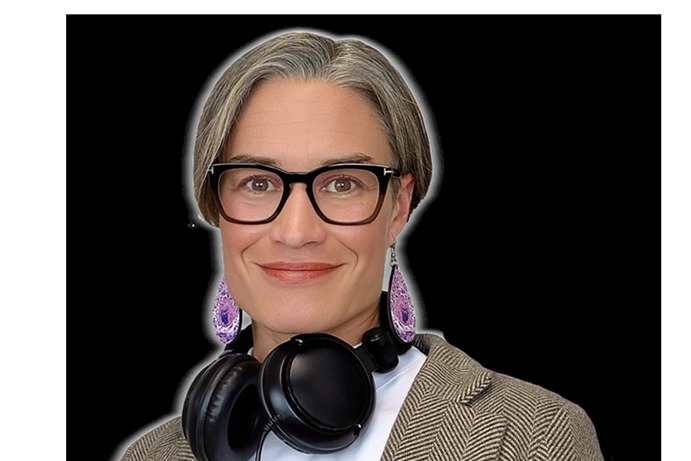
Linda Du is the founder and CEO of Moola Money, the UK-based fintech that uses AI-assisted planning tools to help millennials and women make calmer, better-informed financial decisions. A former McKinsey engagement manager with an MBA from Yale and an M.Eng. from Cambridge, she built Moola after watching highly educated friends struggle to turn financial information into financial decisions.
Table of Contents
- A Living Room Workshop in Berlin
- From McKinsey to Moola
- What Moola Money Actually Does
- The Confidence Gap: Women and Money
- Awards, Recognition and Momentum
- Advice for Women Founders
- Frequently Asked Questions
A Living Room Workshop in Berlin
Moola Money did not begin as a startup pitch. It began as an afternoon in Linda Du's Berlin flat. Working at the time in financial services strategy, Du kept hearing the same questions from friends: should I invest through an ISA or a pension? Should I keep saving cash or start investing? She invited a group of them over for an informal investing workshop, expecting a one-off session.
The room was full of founders, engineers, consultants and lawyers, many with advanced degrees and above-average incomes — and almost all of them expressed uncertainty about their financial future. "The challenge was not a lack of intelligence, ambition, or access to information," Du later wrote. What her friends lacked was a way to connect the moving pieces of their financial lives into a coherent plan. That afternoon planted the seed of Moola Money.
The company now tests those assumptions openly. In Moola's first Alpha Program, 56 participants used the early tools over fifteen weeks; 60% had never engaged a financial advisor and 40% had never seriously considered doing so, yet after the program six in ten planned concrete steps to grow their wealth (Moola Money, "What 56 Millennials Taught Us About Money"). The pattern Du saw in her living room turned out to be the norm, not the exception.
From McKinsey to Moola
Before founding Moola, Du spent nearly half a decade at McKinsey & Company as an engagement manager, advising retail and wealth banks across Europe, the Middle East and Africa — institutions serving tens of millions of customers. She holds an MBA from the Yale School of Management and an M.Eng. from the University of Cambridge, and earlier worked with Kiva across Southern Africa on inclusive finance, microcredit and mobile banking.
She also built her own investment vehicle: Okta Investment GmbH, a family investment office in Berlin active across private markets, technology, renewables and real estate. Okta was named Best Alternative Investor 2025 – Germany and received an Excellence Award in AI/Crypto Investments in 2025. Living and working across five continents gave her, she says, a global lens on how capital is structured — and how overwhelming that structure feels to an individual. Working inside financial institutions and as an investor at the same time made one conclusion unavoidable: the modelling tools reserved for banks making billion-pound decisions were far more sophisticated than anything available to a young professional deciding whether to buy a home or change careers.
What Moola Money Actually Does
Moola Money is an AI-powered financial planning platform built by Moola Money Ltd, a company incorporated in the United Kingdom on 23 January 2025 and still listed as active at Companies House. The product starts with a structured psychographic assessment of a user's money mindset, risk appetite and habits, then models net income and net wealth trajectory so people can see how a single decision — refinancing debt, increasing investments, adjusting savings — changes their projected future.
Three design choices separate Moola from most consumer fintech. First, it sells no financial products and manages no assets, which keeps its guidance conflict-free. Second, bank connections are read-only through FCA-regulated Open Banking, and the company is registered with the Information Commissioner's Office as a data controller. Third, it treats clarity as the product: users pay £10.99 a month or £99.99 a year for unlimited what-if scenarios, refreshed bank connections and coaching, rather than being nudged toward fees or products. In Du's framing, the platform is infrastructure for financial confidence rather than another budgeting app — a philosophy that mirrors other founders on this site, such as Victoria Repa of BetterMe, who likewise built a mass-market habit product before monetising it.
The Confidence Gap: Women and Money
Du's mission is deliberately aimed at a measurable gap. The Financial Conduct Authority's 2023 Financial Lives survey found that 46% of men were likely to invest, compared with 29% of women, while research by Boring Money reported that 26% of UK women invest against 41% of men — a figure that drops to 23% for women under 45. Confidence is where the gap is widest: an HSBC UK survey found only 31% of women felt confident about investing versus 44% of men, and nearly two-thirds (63%) of women said they would not know how to start.
The consequences are not abstract. The University of Bristol's Personal Finance Research Centre tracked almost 6,000 households in November 2025 and found 15% in serious financial difficulties, with women reporting lower confidence in decisions about financial products than men — and the gender gap widest among younger adults. Barclays data adds a behavioural detail: only 31% of new sign-ups to its investment platform are women, even though 55% of its customers with more than £20,000 in cash savings are women. In other words, the money is often there; the permission to act is not. That is precisely what Moola's assessments and scenario models are designed to supply, and it explains why Du talks about money as agency rather than restriction — a theme she shares with leaders like Kristy Kim of TomoCredit, who built a credit product for people the traditional system ignored.
Awards, Recognition and Momentum
Moola and Du have accumulated recognition quickly. In 2025 she won a Bronze Stevie Award for Best Young Entrepreneur at the International Business Awards, and Moola was named one of the Top 5 Women-Led Generative AI Startups in the world by the Generative AI Network. She was included in the Innovate Finance Women in FinTech Powerlist and named a Top Tech Innovator by CEO Magazine; TITAN Women In Business and Leadership Awards gave Moola a 2026 gold in the outstanding startup (women-owned or women-led) category, and the platform was shortlisted for Best Fintech Solution at the 2026 UK Business Tech Awards.
Institutionally, she is a 2025 Vital Voices Fellow and a Senior Executive Fellow in Applied Artificial Intelligence at The Digital Economist, where she published "From Automation to Agency" in February 2026. Alongside Moola she founded Moonshot Radio, a podcast on what it means to be human in the age of technology, which reached more than one million views in its first six months. Recognition, she insists, is a by-product: the mission has not changed since the Berlin workshop — helping people make better financial decisions and build the futures they want.
Advice for Women Founders
Du's advice to her younger self is blunt: "Don't wait for permission. Nobody has it all figured out. Start before you feel ready, you'll learn faster by doing." Two operating habits follow from that. She builds relationships long before she needs them — hiring, partnerships and capital, she says, come from trust established when there is no clear ask. And she expects to be bad at things deliberately: her first cycling expedition, across Madagascar, happened while she was completely underprepared, and she repeats the principle in business.
Her view of capital is equally direct. After Kiva, she came to believe that banking is a utility and a human right, as fundamental as water or electricity. At Moola, that belief shows up as a mostly female founding and hiring approach built entirely on organic networks and referrals — no public job postings — and as a public commitment to financial education, mentoring and investing for women. "When women are given capital, tools and trust, they build resilient businesses, create long term value and lead with a broader definition of success," she has said.
Frequently Asked Questions
Who is Linda Du?
Linda Du is the founder and CEO of Moola Money, a UK fintech building AI-assisted financial planning tools for millennials. She is a former McKinsey engagement manager, holds an MBA from Yale and an M.Eng. from Cambridge, and runs Okta Investment GmbH, a Berlin-based family investment office.
What is Moola Money?
Moola Money is an AI-powered financial planning platform created by Moola Money Ltd. It assesses a user's money mindset and risk appetite, then models net income, net wealth trajectory and the long-term impact of decisions such as saving, investing or repaying debt. It sells no financial products and manages no assets.
How did Moola Money start?
It started with an informal investing workshop Linda Du hosted in her Berlin living room. Despite successful careers, her friends were unsure about pensions, ISAs and investing. Du realised they needed clarity rather than more content, and began applying the modelling techniques she used with banks to individual households — the foundation of Moola.
How much does Moola cost?
Moola offers a seven-day free trial, then charges £10.99 per month or £99.99 per year, including unlimited what-if scenarios, bank connections, Ask Moola on WhatsApp and coaching. Users can cancel at any time from their account page.
Is Moola Money safe to connect to my bank?
Bank connections use read-only Open Banking regulated by the FCA, so Moola can see balances but cannot move money. Data travels over encrypted connections, is never sold, and users can delete their accounts — and everything in them — at any time. It is also possible to enter figures manually without connecting a bank at all.
What awards has Linda Du won?
She won a Bronze Stevie Award for Best Young Entrepreneur in 2025, was named a Top Tech Innovator by CEO Magazine, and was included in the Innovate Finance Women in FinTech Powerlist. Okta Investment was named Best Alternative Investor 2025 – Germany, and Moola took gold at the 2026 TITAN Women In Business and Leadership Awards.
Conclusion
Linda Du's route from a Berlin living room to an award-nominated fintech illustrates a wider truth about women and money: access to financial products has expanded far faster than access to financial confidence. By borrowing the modelling tools used by institutions, refusing to sell financial products, and aiming squarely at the confidence gap measured by the FCA, HSBC and the University of Bristol, Moola Money turns a personal frustration into infrastructure. For women founders, the lesson is that a credible business can start with one honest conversation and a spreadsheet — provided you are willing to start before you feel ready.
Sources
- UK Business Tech Awards — "From a Living Room to an Award-Winning Fintech: The Story Behind Moola Money" (first-person essay by Linda Du, June 2026)
- IdeaMensch — Linda Du interview
- Vital Voices — 2025 Fellow profile
- Moola Money — "What 56 Millennials Taught Us About Money"
- Moola — About the company (team, registration, pricing)
- Companies House — MOOLA MONEY LTD (16203199)
- Forbes UK — Women and Investing (FCA 2023 Financial Lives survey)
- BBC News — Why women are often better investors than men (Boring Money data)
- LBC — HSBC UK research on women's investing confidence
- University of Bristol PFRC — Financial Wellbeing Tracker, November 2025
- Barclays — Saving to investing: normalising talking about investing (2025)
- Katapult Future Fest 2026 — speaker profile