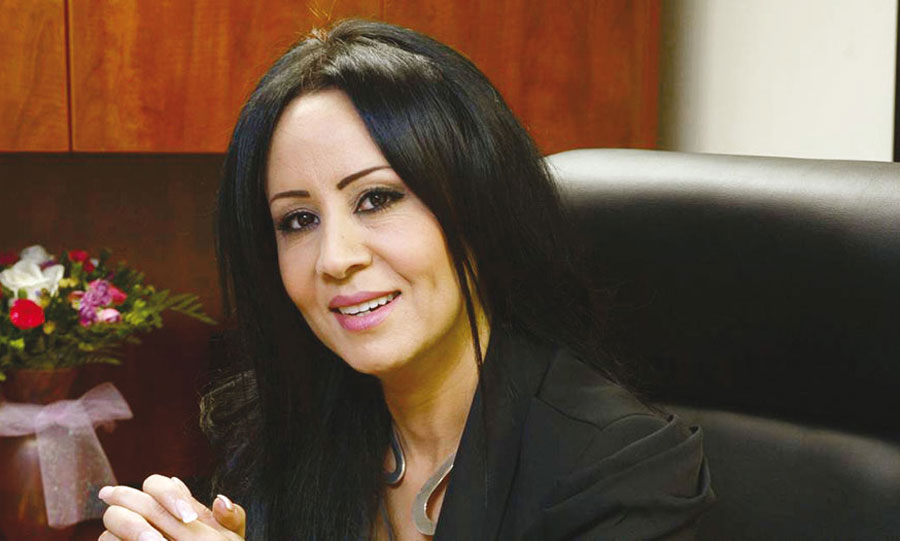
Purva Bangad is a senior data scientist and AI technologist at Meijer who has spent more than eight years turning artificial intelligence from a buzzword into measurable business results. Across Fortune 500 companies, startups and entrepreneurial ventures, she has built generative AI tools, machine learning pipelines and self-service platforms that save teams thousands of hours. Her best-known achievement, at Fidelity Investments: an AI-powered platform that automated the migration of 90,000 legacy business-intelligence reports and cut processing time by 97%.
Bangad's story is not the classic Silicon Valley fairy tale: it begins in Pune, India, passes through an out-of-home advertising startup and two global technology giants, and is still being written. For women seeking a role model in applied AI, her career is a practical blueprint — build what solves real problems, ship early, bring others along.
Table of Contents
- From Pune to Michigan: An International Path in Tech
- The Fidelity Breakthrough: 90,000 Reports and a 97% Time Cut
- Machine Learning on the Retail Floor at Toshiba
- Leading GenAI Marketing Tools at Meijer
- A Builder's Mindset: Research, Open Source and Mentoring
- Her Secrets to Productivity and Growth
- Frequently Asked Questions
From Pune to Michigan: An International Path in Tech
Purva Bangad is an Indian-born technologist based in Michigan, where she works as senior data scientist at Meijer. She holds a bachelor's degree in information technology from the University of Pune and a master's in information systems and decision science from California State University, Fullerton — and she is currently pursuing a professional MBA, a reminder that even senior AI leaders keep student mode switched on.
Her entrepreneurial instinct showed up early: Bangad was part of the founding committee of India Billboards, an analytics-driven advertising startup in Pune that gave advertisers data such as vehicle counts under outdoor displays. SiliconIndia later recognized it as one of India's top 10 adtech startups, in a sector that generated roughly US$568 million in revenue in 2024, up 13.4% year over year.
That experience shaped everything that followed. "I treat engineering not just as a job function but as a way to build and ship things that solve real problems for real people," Bangad has explained. She does not build models for the sake of models; she builds systems people actually use — a lesson that echoes in our analysis of the qualities of successful women in leadership.
The Fidelity Breakthrough: 90,000 Reports and a 97% Time Cut
At Fidelity Investments, Bangad's team faced a problem every large organization knows: tens of thousands of legacy business-intelligence reports that nobody had time to migrate, rationalize or retire. Her answer was an AI-powered platform, built with OpenAI models and Anthropic's Claude through Amazon Web Services' Bedrock, that automated the migration of 90,000 OBIEE reports to Power BI and cut processing time by 97%.
The project compounded automation across the workflow: Python scripts reduced ad-hoc reporting that took several days to a single day, automated extraction of XML metadata from OBIEE portals went from hours to minutes, and a self-service Flask tool let teams rationalize their own reports instead of queuing requests to a central team.
For Bangad, the lesson was as much human as technical. "Early in my career, I trusted the numbers to make the case on their own," she recalled. "People did not move because a chart told them to, they moved when someone connected that chart to something they already cared about." Numbers can do the talking, she now tells junior colleagues, but the human touch paints the picture and gets it hung in the gallery.
Machine Learning on the Retail Floor at Toshiba
Before Fidelity, Bangad was a data scientist III at Toshiba Global Commerce Solutions, where she built a machine-learning classification system that reduced manual issue-analysis time by 80%, using few-shot annotation with the LLaMA language model to classify service requests into hardware buckets automatically.
Her work there went far beyond natural language processing. She engineered a pipeline to detect printer failures from log data and lane-based location tracking, comparing decision trees, random forests, XGBoost and logistic regression for real-time fault detection. She also built Python ETL scripts pulling data from Azure Blob Storage and ServiceNow APIs, and led the integration of MongoDB and SQL databases that improved reporting accuracy by 30%.
Toshiba remains a live proving ground for such work: in May 2026, the company was named a leader in the IDC MarketScape for worldwide point-of-sale software in grocery and food store retail, with the report highlighting its native AI and computer-vision capabilities. A reminder that applied AI quietly saves the most money in data-rich industries — a theme also visible in ventures like Healx.
Leading GenAI Marketing Tools at Meijer
Today, Purva Bangad is senior data scientist at Meijer, the American superstore chain, where she builds generative AI-powered marketing tools on the Databricks platform. She partners with marketing, product and engineering teams to turn campaign needs into scalable AI/ML solutions, builds production-ready pipelines in Python and SQL, and sets the experimentation and KPI frameworks that measure whether those solutions perform.
The role is a sign of where enterprise AI has landed in 2026: not in isolated labs, but embedded in day-to-day marketing operations, where a better recommendation model or a faster reporting workflow translates directly into revenue. Her combination of engineering depth and business fluency — she is pursuing her MBA while leading these initiatives — is exactly the profile companies compete for.
Recognition has followed: Bangad was nominated for the Women in Tech Global Awards 2026 in the AI & Machine Learning Leader of the Year category, and she serves as a judge for the Conrad Challenge and the Business Intelligence Group's Global Awards — programs whose 2025–2026 season drew more than 1,750 projects from students in over 70 countries.
A Builder's Mindset: Research, Open Source and Mentoring
Bangad's impact extends well beyond her employer. She researches the intersection of artificial intelligence, education and labor markets, and has a paper under review on how AI can support lifelong learning and career guidance, including a framework called EduCareer-LLM that grounds career advice in an ontology rather than generic prompts.
She is also an active open-source contributor and technical writer on Medium and dev.to. One of her recent projects — an AI-powered job application tracker built with Claude's tool-use capability — was open sourced on GitHub and picked up by other developers facing the same problem. It carries an outsized lesson: software built for yourself, documented and shared publicly, can build more career credibility than many enterprise initiatives kept behind a firewall.
Mentoring closes the loop. Bangad offers career consultations and interview preparation through Topmate and mentors data professionals through their own career transitions. In a field where women still represent a minority of senior technical roles, that practical guidance compounds — one mentee, one repository and one awards jury at a time. It is the same spirit we celebrated in Francesca Gargaglia's work infusing humanity into technology.
Her Secrets to Productivity and Growth
Ask Bangad how she gets things done and the answer is refreshingly unglamorous. Her days follow a simple shape — work, explore, eat, work out — and productivity comes from what she fills the in-between moments with: podcasts during workouts, reading about what others are building. Her best thinking, she says, happens away from the desk, in conversation.
Her core discipline is a three-step loop: experiment, implement, take a break. "I bring ideas to life by trying to implement them, not just talking about them," she said. "Sometimes that is the only way to find out if an idea would be meaningful once it exists in the real world instead of just in your head." She warns against confusing scrolling with building — a trap that now includes LinkedIn — and her advice to her younger self is blunt: "Just do it. Stop overthinking it. You blink, and suddenly time that felt endless is already gone."
Her growth strategy fits in one line: love what you do, respect the people you work with, and grow with the company rather than only for yourself. Ownership, she adds, is never granted by a promotion — "they hand it to you because you already showed up like you had that level of ownership before you officially did." Outside work she is a dancer, a poet and a chai-loving traveler, currently building an AI Student Coach app and the early stages of a venture called Orchapod AI.
Frequently Asked Questions
Who is Purva Bangad?
She is a senior data scientist and AI technologist at Meijer with more than eight years of experience building applied AI and machine learning systems across Fortune 500 companies, startups and entrepreneurial ventures. She specializes in generative AI, machine learning, NLP and enterprise analytics.
What is Purva Bangad's most famous achievement?
At Fidelity Investments, she architected an AI-powered platform using OpenAI and AWS Bedrock's Claude that automated the migration of 90,000 legacy business-intelligence reports, cutting processing time by 97%.
Where did Purva Bangad study?
She earned a bachelor's degree in information technology from the University of Pune and a master's in information systems and decision science from California State University, Fullerton. She is pursuing a professional MBA.
What did she build at Toshiba Global Commerce Solutions?
She built a few-shot LLaMA-based classification system that reduced manual service-request analysis time by 80%, a machine-learning pipeline for real-time printer-failure detection, and database integration work that improved reporting accuracy by 30%.
Is Purva Bangad involved in entrepreneurship?
Yes. She was part of the founding committee of India Billboards, an analytics-driven advertising startup recognized by SiliconIndia as a top 10 adtech startup, and she is currently building an AI Student Coach app and the early stages of Orchapod AI.
How does she give back to the tech community?
She judges for the Conrad Challenge and the Business Intelligence Group's Global Awards, mentors data professionals through Topmate, contributes to open-source AI tooling, and publishes about applied AI and LLM engineering on Medium and dev.to.
Conclusion
Purva Bangad's career makes a quiet but powerful argument: you do not need a famous exit or a venture fund to reshape an industry with AI. You need a real problem, the discipline to implement rather than merely discuss, and the generosity to share what you learn. From 90,000 migrated reports to an open-sourced job tracker, from Pune's billboards to Meijer's dashboards, she has turned data into decisions — and she is just getting started.
Sources
- IdeaMensch — Purva Bangad interview (August 2026)
- WomenTech Network — Purva Bangad, Women in Tech Global Awards 2026 nominee
- Built In — Purva Bangad author profile (September 2026)
- LinkedIn — Purva Bangad professional profile
- Conrad Challenge — 2026 Innovation Summit Awards
- Toshiba Global Commerce Solutions — IDC MarketScape 2026 press release
- SiliconIndia — India Billboards: An OOH Game Changer