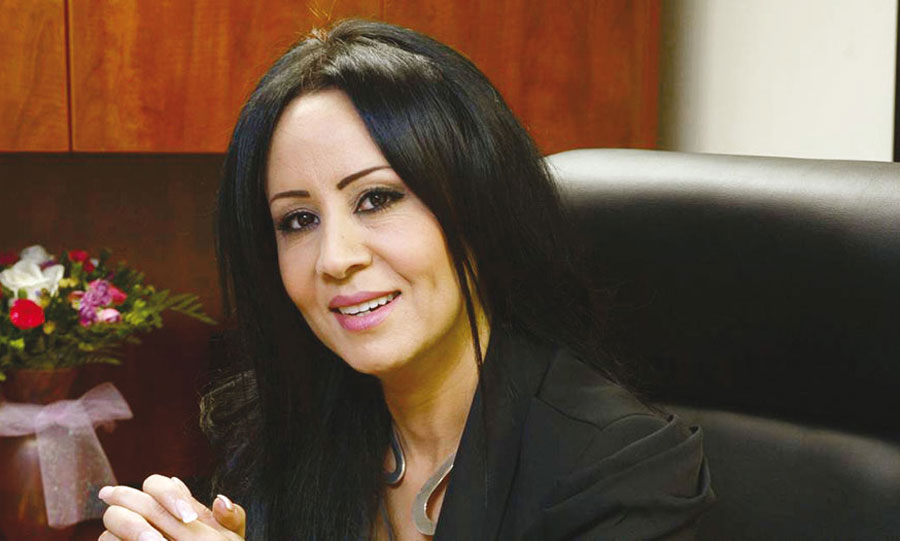
Yasmin Sarwar is a Malaysian-British edupreneur who has spent more than two decades reshaping sixth form education and university preparation in the United Kingdom. She founded two colleges that both reached the top of the national A-Level league tables, and she has guided thousands of students to Oxford, Cambridge, LSE, Imperial College London, UCL and medical schools. Today she is the Founder and Lead Consultant of Quantum Pathways, the education consultancy she launched in 2023 to give families personalised, strategic guidance across the UK, Europe and Asia.
Her career offers a masterclass for any founder: build something that demonstrably works, let results travel ahead of you, and keep redesigning the business around the people it serves.
Table of Contents
- From Lawas to Cardiff: an unconventional start
- Two colleges, two trips to the top of the league tables
- Quantum Pathways: advice built around the student, not the service
- Aspiration should never be selective
- Personalised learning, AI and the "no average student" thesis
- Recognition and results
- Advice Sarwar would give her younger self
- Frequently Asked Questions
- Conclusion: a business built on belief
- Sources
From Lawas to Cardiff: an unconventional start
Sarwar was born in Lawas, in the Malaysian state of Sarawak, and raised in Kuching. She completed her SPM examinations in Malaysia before continuing her education in the United Kingdom, where she would eventually help build institutions recognised among the highest-performing in the country. That trajectory — from a small town in Borneo to the summit of the British education establishment — shapes her conviction that talent is distributed everywhere, while opportunity is not.
In 2004 she founded the Cardiff Centre of Excellence, a small tuition and sixth form venture in Wales. It grew into Cardiff Sixth Form College, one of Wales's largest and top-performing sixth form colleges. Sarwar held sole responsibility for academic quality and university admissions guidance, an unusual concentration of ownership for an educator: she was not only teaching science, she was designing the academic programme and the applications strategy that determined where her students ended up.
That combination — classroom credibility plus admissions expertise — became the product she would later sell as a consultant, and the foundation of every result that followed.
Two colleges, two trips to the top of the league tables
Under Sarwar's leadership, Cardiff Sixth Form College ranked Number 1 in the Times and the Daily Telegraph A-Level league tables from 2013 to 2017, with students achieving 99% A*-B grades. In 2016 the college was acquired by Dukes Education, and shortly afterwards Sarwar moved on.
Many founders would have stopped there. Instead, she repeated the feat somewhere else. In 2017 she joined Oxford International College as Chief Education Officer and introduced the Strategic Global Pathways curriculum, a programme built around super-curricular depth rather than exam drilling alone. The college reached a top UK A-Level league table position in her first year and hit Number 1 in 2019. In that same year, 40% of the Cambridge Medicine offers available to international applicants went to its students — a share that illustrates how concentrated elite admissions can be, and how much of that concentration a single leader can shift.
Getting one institution to the top can be luck. Getting two, at two different organisations, in two different decades of her career, points to a system — and Sarwar has always been explicit that hers is one: identify what a student genuinely cares about, then build an academic strategy around it.
Quantum Pathways: advice built around the student, not the service
In 2023 Sarwar founded Quantum Pathways, an education consultancy serving students and families across the United Kingdom, Europe, Hong Kong, Singapore, Japan and other international markets. The official site quantumpathways.co.uk is live and active, and the firm's positioning is deliberately different from the transactional tutoring market.
The Quantum Pathways method begins by identifying what a student is genuinely interested in, then constructing a personalised strategy around that interest: super-curricular development, subject mastery, academic positioning and admissions preparation. The aim is an application that is authentic rather than formulaic — an important distinction in a consultancy sector crowded with providers who optimise personal statements for a template.
For Sarwar, the commercial model follows from the trust model. Education is built on trust: families trust you with their children's futures, schools trust you with their students, and colleagues trust your judgement. "That trust takes years to build and minutes to lose," she has said. A significant share of Quantum Pathways' work has grown through recommendations and long-term relationships rather than advertising, which is also why her growth strategy is simple: do excellent work, treat people well, and let your reputation travel ahead of you.
Aspiration should never be selective
What separates Sarwar from many admissions consultants is her contrarian belief about who deserves encouragement. In her view, aspiration should never be selective. In many schools, students must reach a certain academic threshold before anyone encourages them to pursue the most competitive universities or courses; decisions about who is capable of aiming high are made largely on the basis of what a student has already achieved.
Sarwar argues the opposite: every young person should be encouraged to aim high, regardless of starting point, because the process itself has value. The additional reading, the intellectual curiosity, the discipline, the confidence and the resilience developed when someone stretches beyond what they thought possible do not disappear when the original destination changes. Some of her most rewarding students, she has said, were those who on paper were not considered obvious candidates for highly ambitious goals.
This is not naive optimism about outcomes — she is explicit that results are never guaranteed. It is a deliberate strategy: treat aspiration as training, not as a prize awarded to those who already look like winners.
Personalised learning, AI and the "no average student" thesis
The trend Sarwar finds most exciting is personalised learning, enabled by technology and AI. Education has largely operated on a one-size-fits-all model — same material, same pace, same assessment — even though every child learns differently. What excites her is that technology can now show not just that a student is struggling, but where and why, allowing earlier intervention.
She has already put that thesis into practice through Curriculum.com, a platform that uses AI and automation to give teachers greater visibility into individual student performance while reducing the administrative and assessment burden that delays interventions. The point, she insists, is not AI replacing teachers. It is using technology to strip out repetitive tasks and hand teachers better information, so they have more time for what great teachers do best: understand, inspire and support individual children. "The future of education is not about teaching more efficiently to the average student," she has said. "It is about getting better at recognising that there is no average student."
She applies the same logic to her own productivity. She uses AI tools such as Claude not to replace judgement but to challenge it — asking the software to critique her reasoning, explore alternative perspectives and surface what she may have missed. Her operating habit is speed on the small things: anything that can be answered, decided or delegated in a few minutes gets handled immediately, because mental clutter drains the capacity reserved for the handful of decisions that really matter.
Recognition and results
Sarwar's work has been recognised across the UK education sector and beyond. She received the Pearson Teaching Award for Science Teacher of the Year in 2011, the Welsh Asian Women Achievement Award in Business in 2015, and recognition as a Claes Nobel Educator of Distinction; she was also shortlisted for Welsh Social Entrepreneur of the Year in 2016. According to her official record, her students include more than 2,000 admitted to Oxford, Cambridge, LSE, Imperial College London and UCL since 2011, more than 1,000 admitted to medical schools, and a body of applicants who have received Russell Group offers.
For women entrepreneurs, the lesson is less about education than about compounding. Sarwar did not chase a new trend every year. She deepened one capability — turning student potential into competitive admissions outcomes — and let each institution, each award and each cohort make the next venture easier to build.
Advice Sarwar would give her younger self
Ask for opportunities. People are often frightened of hearing "no", so they don't ask: they don't write the email, approach the professor, apply for the programme or propose the idea. Sarwar's observation is that the worst outcome is usually exactly where you started, and that some of the best opportunities exist because somebody was willing to ask a question other people were too afraid to ask.
Her second piece of advice is emotional rather than tactical: don't wait to be happy. There will always be another ambition, another challenge, another problem to solve. Happiness postponed until everything is perfect can consume years while the moment you are waiting for never arrives. Keep striving — but find the joy in the people around you, the small victories and the resilience you discover along the way.
Between those two ideas sits her working philosophy. Start before everything is perfect, assemble the best people rather than doing it alone, build relationships instead of collecting contacts, and treat resilience as the refusal to let one disappointment write your next chapter.
Frequently Asked Questions
Who is Yasmin Sarwar?
Yasmin Sarwar is a Malaysian-British edupreneur and the Founder of Quantum Pathways. Over two decades she built two UK colleges to the top of the national A-Level league tables and has guided more than 2,000 students into Oxford, Cambridge, LSE, Imperial College London and UCL since 2011.
What is Quantum Pathways?
Quantum Pathways is the education consultancy Sarwar launched in 2023. It serves students and families across the UK, Europe and Asia, building personalised academic and admissions strategies around each student's genuine interests rather than a standard template.
How did Cardiff Sixth Form College reach Number 1?
After founding the Cardiff Centre of Excellence in 2004, Sarwar built academic quality and university admissions guidance in-house. Cardiff Sixth Form College then ranked Number 1 in the Times and Daily Telegraph A-Level league tables from 2013 to 2017, with students achieving 99% A*-B grades.
What did Sarwar achieve at Oxford International College?
As Chief Education Officer from 2017, she introduced the Strategic Global Pathways curriculum. The college reached a top UK league table position in her first year and Number 1 in 2019, when its students received 40% of the Cambridge Medicine offers available to international applicants.
What is her philosophy on aspiration?
Sarwar believes aspiration should never be selective. She argues that every young person should be encouraged to aim high regardless of their starting point, because the discipline, curiosity and resilience built by stretching beyond expectation retain their value even when the final destination changes.
How does she use AI in education?
Sarwar is an advocate of personalised learning enabled by AI. Through Curriculum.com, the platform she works with, technology gives teachers earlier visibility of where individual students struggle while removing administrative burden — AI supporting teachers, not replacing them.
Conclusion: a business built on belief
Yasmin Sarwar's story is, at heart, an argument about belief: that a student from an unremarkable starting point can aim at the most competitive institutions in the world, and that a founder can rebuild the same successful system — twice — inside different organisations. From the Cardiff Centre of Excellence in 2004 to Quantum Pathways today, the through-line has never changed: know the individual, build the strategy around them, and let the results do the marketing. For any entrepreneur building a service business on trust, it is a playbook worth studying.
Sources
- IdeaMensch — Yasmin Sarwar, Founder of Quantum Pathways
- Yasmin Sarwar — official website, Q&A
- Connectively — professional profile of Yasmin Sarwar
- Quantum Pathways — official website
- Medium — about Yasmin Sarwar
- TechBullion — how Yasmin Sarwar challenged the established order of British sixth form education