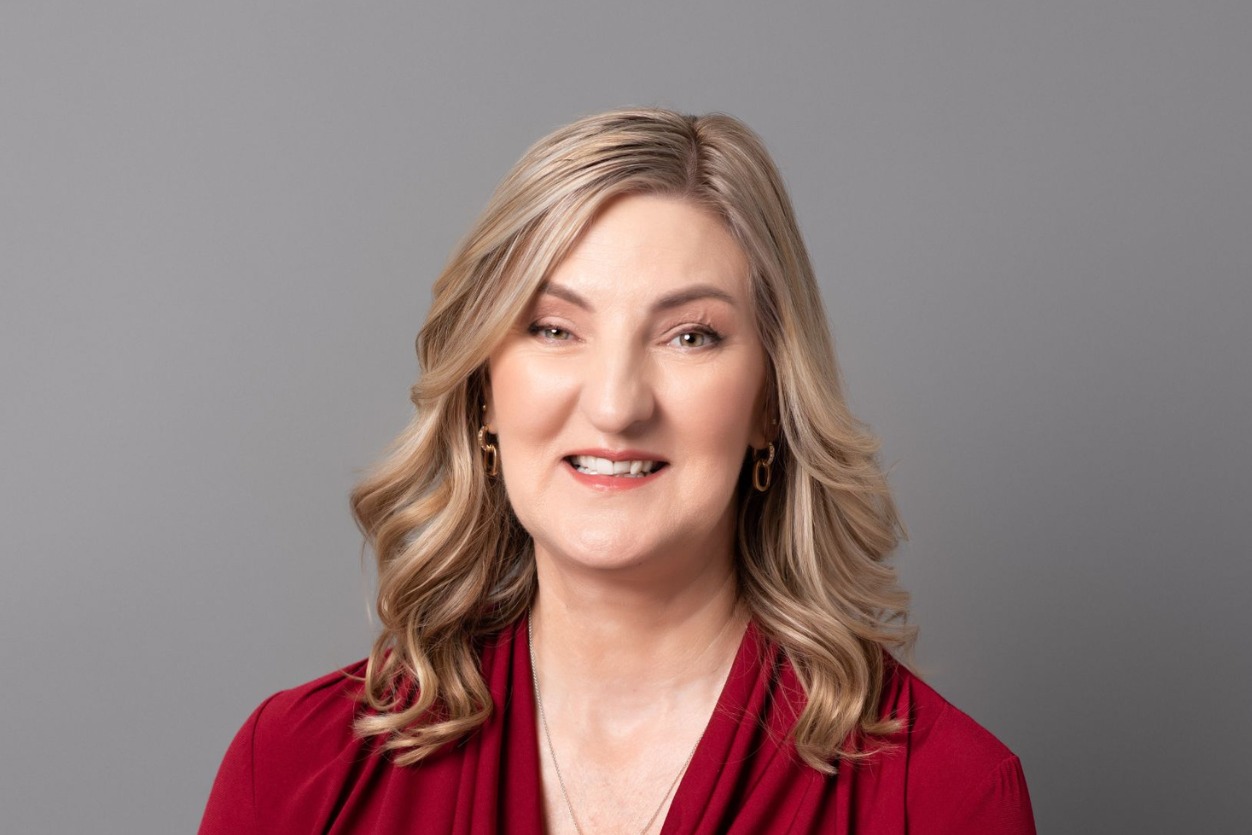
Rachel Francine spent the first decade of her career turning analog businesses into digital ones. Today she runs a company that turns one of the oldest human behaviors — singing — into a reimbursable healthcare intervention for older adults. As co-founder and CEO of Musical Health Technologies, the Los Angeles company behind the SingFit platform, she has built something unusual: a health-tech business whose core technology is a lyric prompt.
SingFit guides caregivers, activity directors, and therapists through active singing sessions designed for people living with dementia, Parkinson's disease, depression, and social isolation. What began as an idea her father had in the mid-1960s now runs in more than 1,000 senior living, skilled nursing, and hospice programs across the United States and the United Kingdom — and since 2026 it is available to AARP members and their families.
Table of Contents
- Who Is Rachel Francine?
- From CitySearch to Current TV: The First Act
- The Family Idea That Became SingFit
- How SingFit Actually Works
- Proving the Model: Research, Awards, and Reimbursement
- Scaling From 500 to 1,000 Care Programs
- Lessons for Women Building Health Tech Businesses
- Frequently Asked Questions
- Conclusion
Who Is Rachel Francine?
Rachel Francine is the co-founder and CEO of Musical Health Technologies, the company that operates SingFit. She founded the business with her brother, Andy Tubman, a board-certified music therapist who is chief clinical officer and architect of much of the platform's clinical protocol.
Her background is not in medicine but in interactive technology. Francine joined CitySearch's New Markets team in 1996, early enough that the platform debate of the day was VHS versus Betamax. She then spent a decade on digital rollouts for media and marketplace companies including The Dallas Morning News, Cars.com, Apartments.com, Warner Brothers, and Al Gore's Current TV, and led teams at Ticketmaster during the shift to online ticketing.
In 2009 she earned a master's degree in Futures Studies and Strategic Foresight from the University of Houston, studying with futurists including Hazel Henderson and Sohail Inayatullah. Her stated goal was to build companies that produce social and financial returns at the same time. SingFit is the vehicle she chose for that ambition.
From CitySearch to Current TV: The First Act
Francine's technology career gave her a specific and transferable skill: taking a service that only works in person and rebuilding it so it can be delivered at scale. That is the exact problem she later solved for music therapy, a field that has always been constrained by the number of trained practitioners available.
The constraint is documented. In a June 2026 interview with Curb Cuts, Francine put the U.S. supply of music therapists at roughly 10,000, against about 190,000 speech-language pathologists. An earlier company statement cited about 7,000 board-certified music therapists. Meanwhile the population that could benefit keeps growing: the Alzheimer's Association reports that an estimated 7.4 million Americans age 65 and older were living with Alzheimer's in 2026, and almost two-thirds of them are women.
That arithmetic — rising need against a small professional supply — is what makes a software platform relevant. It also explains why Francine describes SingFit as a distribution company as much as a health company: the product does not replace music therapists, it standardizes part of what they do so people without musical training can deliver it consistently.
The Family Idea That Became SingFit
The concept dates back further than the company. Francine and Tubman's father, Lou Tubman, was an opera-loving inventor who once worked as a live prompter, feeding lyrics to performers mid-show from a hidden position onstage. In the mid-1960s he imagined a device that could do the same job for anyone — an "opera prompter" for the car, the living room, the bedside.
Two things eventually connected his idea to a business. The first was Tubman's training as a music therapist, and the clinical evidence that melodic and rhythmic cueing can help people with neurological damage recover speech. The second was personal: the siblings' mother, Sandy, developed dementia around the time the product was taking shape, and she became one of SingFit's first testers. Their experience of caring for her — the difficulty of finding something that worked, the relief when singing did — shaped both the product and the company's tone.
"I think there's been four dementia drugs approved by the FDA over the last 30 years," Francine told Music Connection in May 2026. "And there have been hundreds for cancer."
That gap is the commercial opening. Non-pharmacological interventions are not a cure, but they are cheap, repeatable, and low-risk — qualities that matter in care settings where staffing is thin and every additional medication carries a cost.
How SingFit Actually Works
SingFit digitizes an evidence-based music therapy technique called lyric coaching. In a traditional session, a music therapist plays an instrument and speaks the next line of a song a few seconds before the participant must sing it. That removes the two most common failure points: not remembering the words and not being able to read them.
The app reproduces that structure with three layers — a spoken lyric track, a guide-singer track, and a backing track — plus therapist-designed protocols that structure a session around singing, movement, trivia, and reminiscence. The song catalog is deliberately weighted toward the music a person heard in their teens and twenties, the period researchers call the reminiscence bump, when musical memory tends to be strongest.
There are three products: SingFit PRIME for activity directors running group sessions, SingFit STUDIO Pro for occupational therapists and speech-language pathologists, and SingFit STUDIO Caregiver for family caregivers with no clinical training. Facilitator onboarding is deliberately short — one training session — because the model only works if a busy activity director can run it on a Tuesday morning without a music degree.
Francine's summary of the mechanism is blunt: "No matter what you sing, you're getting a full brain workout." Singing engages respiratory control, motor sequencing, language, and memory at once, and releases neurochemicals associated with mood and social bonding. The company is careful to say the platform enables music engagement rather than guaranteeing outcomes — a distinction that matters for reimbursement.
Proving the Model: Research, Awards, and Reimbursement
Health technology lives or dies on evidence and payment, and SingFit has pursued both. The company won the USC Keck School of Medicine Body Computing Prize, a CES Healthy Aging Award, the American Telemedicine Association's Most Innovative Prize, and multiple AARP caregiving awards; in 2017 Francine was named one of AARP's 50+ Innovation Leaders, an initiative administered by MedCity News.
More consequentially, in July 2024 Musical Health Technologies received an A2 Collective Pilot Award funded by the National Institute on Aging under grant P30AG073107. The 12-month study is using a sample of at-risk rural older adults to build machine-learning capabilities that can tailor musical prescriptions to different cultural and musical backgrounds — an acknowledgment that a catalog built for one generation of Americans does not automatically fit everyone.
On the payment side, the milestone was coverage: in November 2023, Longevity Health Plan, an institutional special needs plan for skilled nursing residents, began covering SingFit. Reimbursement is the barrier that stalls most digital therapeutics, and a product that reduces as-needed anti-anxiety medication is more attractive to a value-based plan than one that merely delights users. Company-reported data from earlier deployments — a 42% mood elevation and a 40% reduction in as-needed anti-anxiety medications among regular users — is the kind of metric operators actually track.
The need is enormous: the World Health Organization counted 57 million people living with dementia worldwide in 2021, with nearly 10 million new cases a year, and put the global cost at US$1.3 trillion in 2019. In the U.S., the Alzheimer's Association projects dementia-related costs will reach $409 billion in 2026.
Scaling From 500 to 1,000 Care Programs
SingFit's growth curve is measured in care settings rather than app downloads. By 2022 the platform was in roughly 500 long-term care communities. By mid-2024 that figure was nearly 800, with 3,430 certified facilitators, more than 32,000 users, and more than 12 million sessions delivered. In December 2025 the company announced it had passed 1,000 senior living, skilled nursing, adult day, and hospice programs across two countries.
International expansion followed the same logic. SingFit entered the United Kingdom through Health Innovation Yorkshire & Humber's Propel@YH accelerator, worked with Nexus at the University of Leeds, and achieved Digital Technology Assessment Criteria compliance in May 2024 — the gate for consideration by NHS institutions.
The newest expansion is consumer-facing: a June 2026 AARP partnership offering members and registered users free music resources and discounted access. The timing reflects a demographic reality AARP quantifies at approximately 63 million U.S. caregivers in 2025, many of them adult children managing a parent's care without training, budget, or backup.
Lessons for Women Building Health Tech Businesses
Francine's path differs from the typical venture-backed founder story. She was in her forties, with two decades of operating experience, when she started the company with a family member whose clinical expertise she did not have.
Three lessons stand out. First, the founding team's skills were complementary: a technologist for distribution, a clinician for credibility. Neither could have built SingFit alone. Second, the company picked a buyer with a financial reason to care — care plans and operators under pressure to cut hospitalizations, falls, and medication use — instead of selling wellness to individuals. Third, it treated reimbursement and regulatory approval as product features from the start, pursuing I-SNP coverage and UK DTAC compliance early rather than leaving them for later.
There is a caution embedded in the story. Francine has spoken openly about the gap between the size of the dementia problem and the thinness of the treatment pipeline, and building in that gap requires patience with institutions that move slower than software. For women entering health tech, credibility is accumulated through documentation: studies, certifications, coverage decisions, and named partners.
If you are exploring adjacent opportunities, our guides to starting a corporate wellness consulting practice and to Alexa Heathorn's recovery-to-wellness business cover the commercial side of health and wellbeing services; Lauren Fleming's pelvic health brand is a useful case study in building a product around an underserved clinical need.
Frequently Asked Questions
What is SingFit and who is it for?
SingFit is a digital health platform that delivers therapeutic singing sessions for older adults, especially those with dementia, Parkinson's disease, depression, or social isolation. It is used by activity directors in senior living communities, by occupational therapists and speech-language pathologists, and by family caregivers at home.
Is SingFit the same thing as music therapy?
No. SingFit was designed with board-certified music therapists, including co-founder Andy Tubman, but it is a technology platform that enables structured music engagement rather than a replacement for clinical music therapy. Licensed music therapists complete an accredited degree program and board certification; SingFit facilitators typically complete a short training session.
Who founded Musical Health Technologies?
Musical Health Technologies was founded in 2014 by siblings Rachel Francine, a technology executive, and Andy Tubman, a board-certified music therapist. Francine serves as CEO and Tubman as chief clinical officer. The underlying idea came from their father, inventor and opera enthusiast Lou Tubman, in the mid-1960s.
How many care communities use SingFit?
As of December 2025, SingFit reported that its PRIME program was active in more than 1,000 senior living communities, skilled nursing facilities, hospice programs, and adult day programs across the United States and the United Kingdom. Earlier disclosures put the platform at roughly 800 communities in mid-2024 and about 500 in 2022.
Is SingFit covered by insurance?
Coverage is expanding but not universal. In November 2023, Longevity Health Plan, an institutional special needs plan for skilled nursing residents, began covering SingFit, and the company reports that its integrations support enrollment in those plans. In 2026 SingFit also launched an AARP partnership offering members discounted access, which is a consumer discount rather than insurance reimbursement.
What does Rachel Francine say the company is trying to achieve?
Francine frames the mission as making therapeutic music available at population scale, describing the goal as reinserting singing into healthcare "from womb to hospice." She has also argued that music as medicine creates a new revenue line for songwriters, performers, and rights holders, not just for health companies.
Conclusion
Rachel Francine's company sits at an unusual intersection: a software business whose effectiveness depends on a human voice, and a healthcare business whose product is a song from someone's adolescence. What makes SingFit instructive is the sequencing — a family insight, a clinician co-founder, a documented evidence base, a payer relationship, and then scale.
The market numbers are not ambiguous: the World Health Organization counted 57 million people living with dementia in 2021 and nearly 10 million new cases a year, while the Alzheimer's Association estimates 7.4 million Americans age 65 and older with Alzheimer's in 2026 and $409 billion in related costs that year. Against that demand stands a workforce of roughly 10,000 music therapists in the United States. Any solution that widens access without diluting clinical rigor has a real market, and Francine has spent more than a decade building one — one prompted lyric at a time.
Sources
- World Health Organization — Dementia fact sheet
- Alzheimer's Association — Alzheimer's Disease Facts and Figures
- SingFit — Our Team
- SingFit — About Musical Health Technologies
- DocWire News — Interview with Rachel Francine, CEO of SingFit (November 2022)
- Music Connection — SingFit Merges Music with Technology (May 2026)
- Curb Cuts — SingFit's Mission Is To Mainstream Music Therapy (June 2026)
- Los Angeles Times — SingFit AARP Partnership Brings Music-Based Caregiving to Families (June 2026)
- SingFit — PRIME reaches 1,000 programs (December 2025)
- SingFit — A2 Collective Pilot Award from the National Institute on Aging (July 2024)
- SingFit — UK expansion and DTAC compliance (July 2024)
- LeadingAge — Insurer to Cover Music Therapy in Nursing Homes (November 2023)
- PR.com — Dementia Society of America presents Dementia SMART Award to SingFit
- Nexus Leeds — SingFit's story