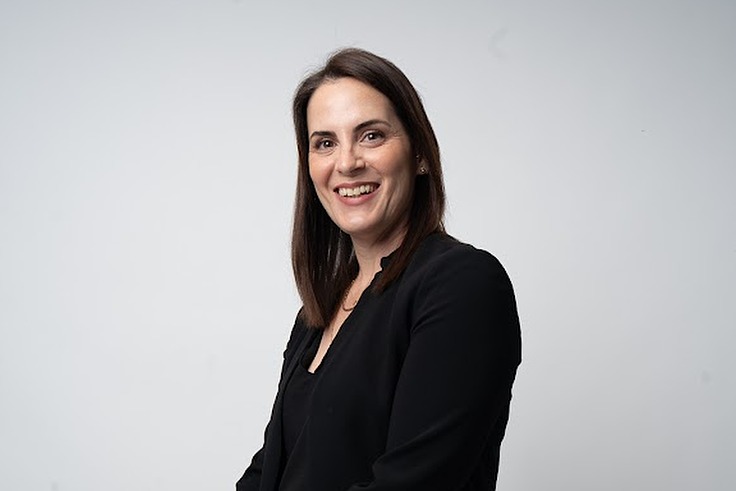
Elyse Bensusan is a licensed clinical psychologist who became the founder and principal designer of Elyse Interiors, a New York studio with projects from Manhattan to the Hamptons, Greenwich, Los Angeles and Paris. She also founded Elysium Gives, a nonprofit that furnishes homes for families moving out of shelters. What makes her career worth studying is not the switch between fields but the fact that she never abandoned the first one: her design decisions are still made with a psychologist's question in mind — how does this room make the person standing in it feel?
Table of Contents
- Who Is Elyse Bensusan?
- The Psychology Degree Behind the Design Work
- A Pandemic Pivot That Started in the Hamptons
- The Art of the Mix: Contrast as a Signature
- What It Actually Takes to Run a Design Studio
- Why Design Work Sells Homes Faster
- Elysium Gives: Furniture as the First Step Out of a Shelter
- Lessons for Women Building a Second Career
- Frequently Asked Questions
- Conclusion
Who Is Elyse Bensusan?
Elyse Bensusan is a New York interior designer, licensed clinical psychologist, author and philanthropist who runs two organizations built on one premise: the space a person lives in shapes how that person lives. She leads Elyse Interiors Design Studio as founder and head of creative, and she founded the Elysium Gives Foundation, which by its own published count has helped more than 60 families and individuals move from shelters and crisis situations into furnished permanent housing.
Her studio works from Fifth Avenue in Manhattan and has taken on projects in Southampton, Greenwich, Los Angeles and Paris. Bensusan arrived with a doctorate and a working clinical practice rather than a design degree, and she still runs a psychological testing practice where she mentors early-career psychologists. That dual life explains why her advice to founders sounds more like a therapist's than a stylist's.
The Psychology Degree Behind the Design Work
Bensusan's design method starts with environmental psychology, the study of how light, colour, scale, acoustics and materials interact with mood and behaviour. The field matters more than most homeowners assume, because the audience for a room is captive: the U.S. Environmental Protection Agency reports that Americans spend roughly 90 percent of their time indoors.
That framing changes concrete decisions: lighting governs how a room feels at seven in the morning and at nine at night, a muted palette keeps a small apartment from feeling loud, and scale is the difference between calm and cramped at identical square footage.
Bensusan describes her interest as beginning with the interaction between people and the spaces they inhabit, and her studio's stated approach is organised around the senses rather than a signature colour. The lesson travels beyond design: the expertise you arrived with is not a detour from a new field, it is what lets you charge for judgement instead of taste.
A Pandemic Pivot That Started in the Hamptons
Elyse Interiors grew out of a single pandemic-era project in the Hamptons rather than a five-year plan. Bensusan has said the move was not calculated: during the disruption of 2020 she finally pursued a long-standing interest in home decoration, and one project produced referrals that became a studio with work in four states and two countries.
The timing was less fortunate than it now looks. IBISWorld puts the U.S. interior design industry at about $26.4 billion in 2026, growing just 0.2 percent a year between 2021 and 2026, with an estimated 1.4 percent decline in 2026 alone. A founder entering a flat market cannot rely on the tide. What carried the studio was the shape of the offer — a psychologist's read on how a client wants to live, sold to homeowners who were suddenly spending every hour inside their houses.
The sequence is worth copying: she did not open a studio and then hunt for clients. She did one project unusually well, in a market where her network already lived.
The Art of the Mix: Contrast as a Signature
Bensusan's signature is the deliberate mixing of eras and materials: modern forms against vintage details, bronze and brass against wood, textured wallcoverings against muted palettes, soft upholstery against the hard edge of a custom smoked mirror. She calls it the art of the mix, and the contrast is functional, not decorative — it gives a new room a sense of history and keeps a period room from feeling like a museum.
The approach matches how clients read a space. In the National Association of Realtors' 2025 Profile of Home Staging, buyers' agents ranked the living room as the most important room to stage at 37 percent, followed by the primary bedroom at 34 percent, while sellers' agents reported staging the living room 91 percent of the time. Bensusan's emotional centre of a project is the market's centre too.
For a founder, the commercial point is that a point of view is an asset: rooms that look like a catalogue are interchangeable, while rooms that could only have been assembled by one person get referred. Designers turning that positioning into revenue can follow this guide to starting an interior design consulting business online.
What It Actually Takes to Run a Design Studio
Running a studio is a different skill from designing a room, and Bensusan learned it the hard way. In the first months she took on too many clients while trying to control every detail. Undervalued staff, delayed projects and burnout followed; the correction came after about five months, when she pushed decision rights down to her staff and kept strategy and client relationships for herself.
The economics explain why that correction was unavoidable. The U.S. Bureau of Labor Statistics counted about 71,500 wage-and-salary interior designers in May 2025, with a median annual wage of $67,190 and a mean of $74,540; New York State's median was $75,580. Roughly a quarter of the occupation is self-employed, and the BLS projects just 3 percent employment growth from 2025 to 2035, with about 7,700 openings a year, mostly replacements. In a market that flat, a studio does not scale by hiring more designers. It scales by raising the value of the projects the principal touches — possible only if the principal stops touching everything.
Her other growth lever is ideological: find someone who has already built what you want to build, ask what skills it required, then master those skills instead of improvising — a discipline that suits a second-career founder with less runway to spare.
Why Design Work Sells Homes Faster
Professional design and staging sell houses faster and, in a meaningful share of cases, for more money — documented well enough to use as a sales argument rather than a hunch. The National Association of Realtors' 2025 Profile of Home Staging found that 29 percent of agents reported staging lifted the offer price by 1 to 10 percent against comparable unstaged homes, and 49 percent of sellers' agents said it cut time on market.
The perception data is stronger still. Eighty-three percent of buyers' agents said staging made it easier for a buyer to picture the property as their future home, and only 12 percent said it had no effect. Photos (73 percent), physical staging (57 percent), video (48 percent) and virtual tours (43 percent) were all rated highly important to buyers browsing listings online.
For a studio, that is the difference between selling a luxury and selling a return: the work is about how the owner lives in the house and what it is worth when the owner leaves.
Elysium Gives: Furniture as the First Step Out of a Shelter
Elysium Gives takes the surplus of the design world — gently used furniture, beds, cribs, tables, couches — and converts it into furnished homes for families leaving shelters. Bensusan founded the nonprofit in 2024 as an offshoot of the studio. It has since assisted more than 60 families and individuals in crisis, including survivors of domestic abuse, people moving out of homelessness and households displaced by fires, with recipients identified by social agencies, schools, synagogues and churches rather than by application. Weekly pickups run in New York City and on Long Island.
The need is measurable. The Coalition for the Homeless reports that 97,026 people slept in New York City shelters on a typical night in September 2026, 65 percent of them members of homeless families, including 30,897 children. A family that exits shelter into an empty apartment has housing but not yet a home, and the gap between those two things is exactly what a bed and a dining table close.
The foundation has also worked outside its home market, delivering furniture and essentials to families displaced by Hurricane Helene in the Carolinas. Strategically, the charitable arm is a supply-chain fit: the studio already knows what a room requires, what can be salvaged and who can move it.
Lessons for Women Building a Second Career
The most transferable lesson from Bensusan's career is that a first profession is not a detour when you change fields — it is the raw material of the second one. She did not out-design people who had trained since eighteen; she sold a perspective they did not have, the way Catharine Montgomery built an AI-forward communications agency from an equity-first angle. That works in almost any crowded service market. Data USA's analysis of Census data found that 84.2 percent of the 95,487 people working as interior designers in 2024 were women, so the field is not short of talent; it is short of angles.
Three practices are worth copying: delegate decision rights, not just tasks — her studio improved only once staff could make calls without approval; take the project you can do exceptionally well inside the network you already have; and build the charitable arm early, while it can still be run by hand.
The financial case for a second act is unglamorous but real. With a median wage near $67,000 and roughly a quarter of designers self-employed, the occupation is not a fast route to wealth; it is a route to owning your own judgement.
Frequently Asked Questions
Who is Elyse Bensusan?
Elyse Bensusan is a New York-based interior designer, licensed clinical psychologist, author and philanthropist. She is the founder and principal designer of Elyse Interiors Design Studio and the founder of the Elysium Gives Foundation, a nonprofit that furnishes homes for families leaving shelters.
What is Elyse Interiors Design Studio known for?
The studio is known for what Bensusan calls the art of the mix: interiors that combine modern forms with vintage details, wood with bronze and brass, textured wallcoverings with muted palettes, and custom-shaped smoked mirrors. Its projects span New York City, the Hamptons, Greenwich, Los Angeles and Paris.
Did Elyse Bensusan train as an interior designer?
No. She trained and practised as a clinical psychologist and built her design method on environmental psychology, the study of how light, colour, scale, acoustics and materials affect mood and behaviour. She moved into design during the pandemic, starting with a project in the Hamptons.
What is Elysium Gives and who does it help?
Elysium Gives is a nonprofit Bensusan founded in 2024. It collects donated furniture and household essentials and delivers them to families and individuals moving from shelters or crisis situations into permanent housing. By its own published count it has assisted more than 60 families, with recipients referred by social agencies, schools, synagogues and churches.
How much do interior designers earn in the United States?
The U.S. Bureau of Labor Statistics put the median annual wage for interior designers at $67,190 in May 2025, with a mean of $74,540. New York State's median was $75,580. About a quarter of interior designers are self-employed, which is why studio owners often earn through project fees rather than a salary.
What can entrepreneurs learn from her career change?
Three things stand out: treat your first profession as a differentiator rather than a detour, delegate decision rights instead of only tasks so the business can grow past the founder, and start small in a network you already have instead of waiting for a portfolio that looks impressive online.
Conclusion
Elyse Bensusan's career reads as a single argument rather than two: the rooms people live in do work on them, and someone has to take that work seriously. She brought a psychologist's training to a business usually sold on taste, built a studio that spans four states and two countries, then pointed the same infrastructure at families who had just been handed an empty apartment. For women weighing a second act, her example is concrete — the degree you already hold is a market position, delegation is the growth lever, and the charitable arm is not a distraction from the business but evidence of what the business is for.
Sources
- IdeaMensch, interview with Elyse Bensusan, founder of Elyse Interiors Design Studio and Elysium Gives (September 2024) — ideamensch.com/elyse-bensusan
- Elyse Interiors Design Studio, studio profile and Our Story — elyseinteriors.com
- U.S. Environmental Protection Agency, Indoor Air Quality report and factsheet (2025) — 90 percent of time spent indoors
- IBISWorld, Interior Designers in the US, industry report (July 2026) — $26.4 billion market size, 0.2 percent CAGR 2021-2026
- U.S. Bureau of Labor Statistics, Occupational Outlook Handbook: Interior Designers (May 2025 wage data; 2025-2035 projections)
- National Association of Realtors, 2025 Profile of Home Staging (May 2025)
- Coalition for the Homeless, Basic Facts About Homelessness: New York City (September 2026 shelter census)
- ABNewswire, "Elyse Bensusan and Elysium Gives: Empowering Communities Through Home Furniture Donations" (September 2024)
- Data USA, Interior Designers occupational profile (2024 American Community Survey data)