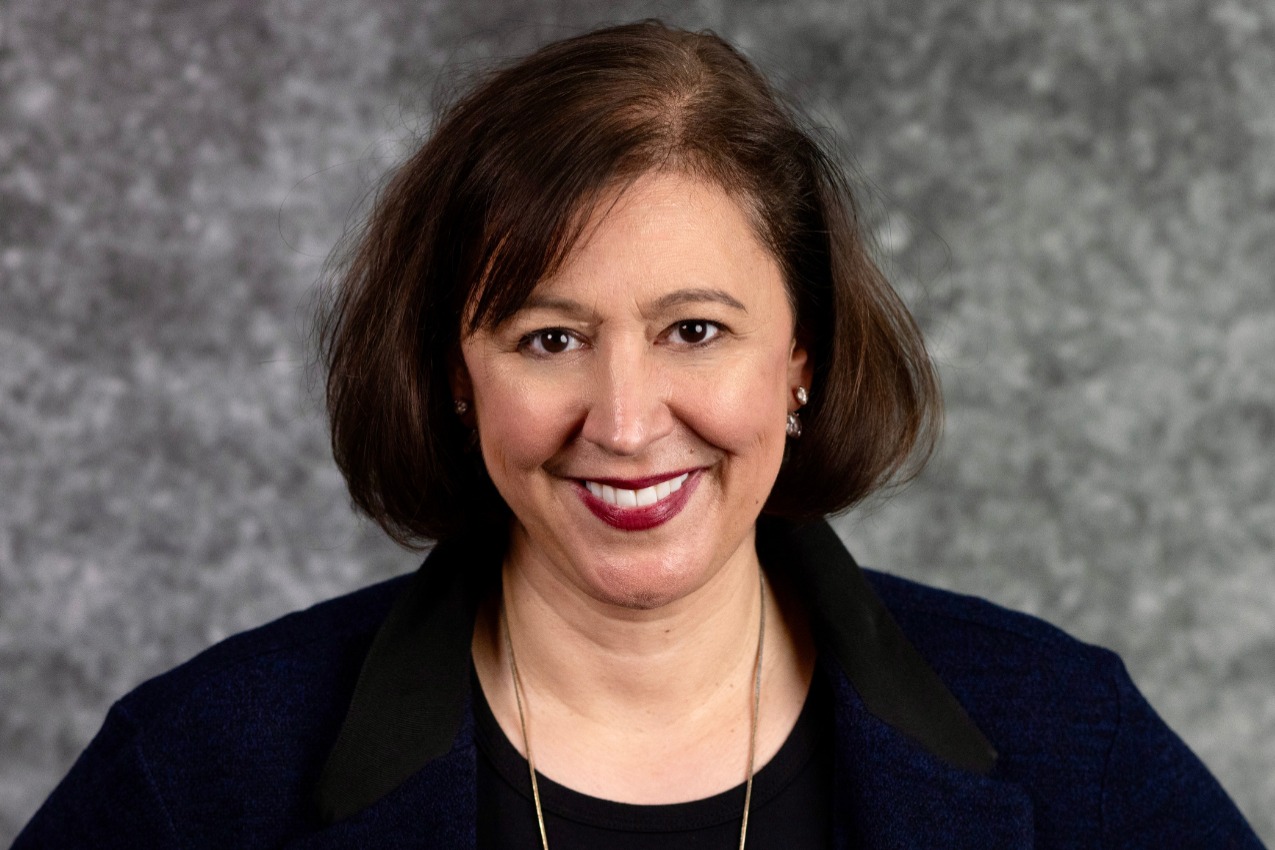
Who Is Roxana Taghavi?
Roxana Taghavi is a family law attorney in Los Angeles and the co-founder of Valencia-Taghavi LLP, a boutique firm she built with her partner Benjamin Valencia. She is also one of a small group of California lawyers who hold the Certified Family Law Specialist (CFLS) designation from the State Bar of California, a credential she notes is held by roughly 1% of family law attorneys in the state.
Her path into law was not a single-track climb. She graduated cum laude from UCLA with dual degrees in English and Philosophy, then earned her Juris Doctor at Pepperdine University School of Law. She spent more than 20 years in practice, including nearly a decade at what she describes as the nation's largest family law firm, before deciding that the next chapter needed her name on the door rather than someone else's.
Table of Contents
- Who Is Roxana Taghavi?
- The Turn From Employee to Owner
- What Certified Specialist Status Actually Means
- Building a Boutique Firm in a Celebrity Divorce Market
- The Client-First Playbook for High-Conflict Cases
- Protecting Women's Financial Futures Before the Breakup
- Why Community Work Belongs in the Business Model
- Hard Work, Self-Reflection and the Immigrant Example
- What's Next for Valencia-Taghavi
- Frequently Asked Questions
- Conclusion
- Sources
The Turn From Employee to Owner
The most striking thing Taghavi says about entrepreneurship is that she almost missed it. Asked about a career failure, she does not describe a lost motion or a case that went sideways. She describes hesitation: she had the skills to run her own practice years before she tried. "If I could change one thing, it would be having the confidence to become my own boss sooner," she told Inspirery.
That is a familiar pattern for women in professional services. Women made up 41% of all U.S. lawyers in 2024, according to the American Bar Association's Profile of the Legal Profession, yet they remain a minority in the seats where ownership and economics are decided. The same ABA research, drawing on NALP data, found that just 28% of law firm partners were women in 2023. Taghavi's advice to her younger self reads like a line written for every associate waiting to feel ready: "Be brave, embrace risks, and not settle for just a paycheck." Other lawyers who made the same leap describe a similar arc, as Ashley Rector's move from burned-out attorney to agency owner shows.
What Certified Specialist Status Actually Means
The CFLS designation is not a marketing label. In California, certified specialists must pass a written examination in their specialty, demonstrate substantial experience, complete ongoing education and be evaluated favorably by other attorneys and judges familiar with their work, according to the State Bar of California. Only attorneys certified by the California Board of Legal Specialization, or by an organization whose program the State Bar accredits, may describe themselves as certified specialists.
The numbers are small. As of March 1, 2022, the State Bar counted 1,357 certified specialists in family law across a state with one of the largest lawyer populations in the country. Taghavi's own shorthand, that the credential is held by about 1% of family law attorneys, is consistent with that figure.
For a founder, the credential does two jobs at once. It shortens the trust conversation with clients interviewing several attorneys during the worst month of their lives, and it sets an internal standard: the firm's work has to be defensible to peers, not just persuasive to a client.
Her external record follows the same logic. She has been selected as a Super Lawyer every year since 2019, after earlier recognition as a Rising Star, and her case history includes settling a $20 million marital estate, restoring near-equal custody for a father after his imprisonment and overturning a premarital agreement other lawyers had declined to challenge.
Building a Boutique Firm in a Celebrity Divorce Market
Valencia-Taghavi LLP operates in a market where discretion is a product feature. Los Angeles family law involves public figures, business valuations, international jurisdiction disputes, restrictive gatekeeping claims, alienation allegations, domestic violence and the needs of children with disabilities. A firm that advertises itself for celebrity clients is really selling the ability to handle complexity without leaking it.
The market is not small. The Centers for Disease Control and Prevention recorded 673,989 divorces in the United States in 2022, a rate of 2.4 per 1,000 people, and its national counts exclude California, Hawaii, Indiana, Minnesota and New Mexico because those states do not report the data. The largest state in the country is missing from the national divorce picture, which is one reason local expertise matters more than national averages.
Taghavi and Valencia built the practice on complementary strengths rather than a single rainmaker. Coverage of the firm describes Valencia as the strategist and Taghavi as the advocate known for empowering women in disputes, and the pair has leaned into that positioning: divorce, custody, prenuptial and postnuptial agreements, and counsel for clients whose lives are documented by other people.
The Client-First Playbook for High-Conflict Cases
Ask Taghavi how she approaches a high-net-worth custody fight and the answer starts with relationships, not statutes. "I genuinely care about my clients, and I think that's where my strategy begins," she said. "I aim to understand my clients on a personal level, which builds trust and helps me determine the best course forward."
From there the method becomes operational. She is candid about litigation being a means rather than a goal, and she says she finds real reward in settling a case without it. She also treats expectation management as an ethical duty: "It's important to manage expectations so people don't waste time and money attempting to attain unrealistic results."
The third layer is a bench. Taghavi works with forensic accountants, mental health professionals and private investigators, and she calls that network invaluable for shaping case strategy. For a boutique firm, that is how you compete with larger opponents without hiring a hundred people.
One case illustrates the approach. A client was so overwhelmed by the divorce that Taghavi worried she could not meaningfully participate in her own case. The team brought in a mental health professional to assess competency and recommend care, including inpatient rehabilitation. It took patience, but the client re-engaged and the matter moved forward. Not every case resolves that way, Taghavi notes, because it depends on the client's commitment, but when it does the result is measured in more than a settlement figure.
Protecting Women's Financial Futures Before the Breakup
Taghavi's most transferable business lesson has nothing to do with law firm operations. It is about what happens to people who outsource their financial literacy to a spouse and then lose access to the person doing the managing.
"Many clients are blindsided during divorce because they had no knowledge of their marital finances," she told Women's Journal. Her prescription starts before the wedding: understand a partner's income, assets, debts and credit history, and consider a prenuptial agreement where significant assets or earnings are involved. During the marriage, she argues for reviewing statements, tax returns and credit accounts, and for reading real estate and tax documents before signing them.
The advice has structural weight behind it. Women hold 22% of equity partnerships in law firms, according to figures the ABA cites from the National Association of Women Lawyers, so the people drafting the agreements are still disproportionately men even as the client base shifts. Taghavi's answer is to make the client harder to surprise: knowledge first, a team second, and a lawyer who explains rather than performs.
She frames the outcome in language clients can hold onto. "Divorce is an opportunity for reinvention," she says, provided the person has the right support and counsel to rebuild rather than simply survive. The same principle drives Catherine Valega's work helping women own their money without the jargon.
Why Community Work Belongs in the Business Model
In March 2025, Valencia-Taghavi served as a presenting sponsor of the Heart to Heart Gala at the Taglyan Complex in Hollywood, an event supporting Inclusion Matters by Shane's Inspiration and its work on inclusive playgrounds and programs for children with disabilities.
"Being a part of this gala was truly inspiring," Taghavi said. "It's incredible to see so many people come together to support inclusion, and we are proud to be a part of a community that champions the rights and opportunities of all children." She added a line that reads like a practice philosophy as much as a philanthropic one: "Families come in many forms, and every child deserves to feel seen, supported, and included."
For a firm whose cases often involve special-needs children and custody arrangements, the sponsorship is not decorative. It places the partners alongside the clinicians, advocates and donors who understand the families they represent.
Hard Work, Self-Reflection and the Immigrant Example
Taghavi traces her standard to her parents. She grew up with two working parents, including an immigrant father who, with her mother, "built a beautiful life here, basically from scratch." The lesson she took was that no challenge is insurmountable, and that success in any profession comes down to hard work versus complacency.
What makes that more than a slogan is the follow-through. She says she routinely analyzes how she could have done better at the conclusion of each case and invites constructive criticism, a habit that fits a lawyer who treats post-mortems as a professional discipline rather than a punishment.
What's Next for Valencia-Taghavi
The firm is expanding its services to address emerging family law challenges in Los Angeles and beyond, according to coverage of its growth, and it has been building a public profile through television appearances and contributed commentary on protecting women's interests during divorce. For founders weighing a similar jump, the legal pitfalls of starting a business are worth reviewing before the first client signs.
The open question for any boutique built on two founders is scale. Taghavi's model relies on personal attention, a trusted expert network and a reputation that travels by referral, all of which resist replication. Her own answer to the growth question is unromantic: hold the standard, review the work, and let the record do the marketing.
Frequently Asked Questions
Who is Roxana Taghavi?
Roxana Taghavi is a Los Angeles family law attorney and co-founder of Valencia-Taghavi LLP, a boutique firm she started with Benjamin Valencia. She holds the Certified Family Law Specialist designation from the State Bar of California and has more than 20 years of practice experience, including nearly a decade at what she describes as the nation's largest family law firm.
What does Certified Family Law Specialist mean in California?
It is a credential issued through the State Bar of California's legal specialization program. Attorneys must pass a written specialty examination, show substantial experience in family law, complete ongoing education and be evaluated by other attorneys and judges. Only certified specialists may use the title, and the State Bar counted 1,357 certified family law specialists statewide as of March 2022.
What kinds of cases does Valencia-Taghavi LLP handle?
The firm focuses on high-asset divorce, contested custody, prenuptial and postnuptial agreements, business valuation and property division, and interstate or international jurisdiction disputes. Its attorneys also work on matters involving domestic violence, restrictive gatekeeping, parental alienation, estrangement and the needs of children with disabilities.
How does Roxana Taghavi approach high-conflict custody disputes?
She starts with the relationship, building enough trust to understand what the client actually needs, then assembles specialists such as forensic accountants, mental health professionals and private investigators as the case requires. She favors child-centered agreements designed to reduce future conflict and is explicit about managing expectations so clients do not spend money chasing outcomes a court will not deliver.
What should women do financially before and during a divorce?
Taghavi advises understanding a partner's income, assets, debts and credit history before marriage, and considering a prenuptial agreement where significant assets are involved. During the marriage she recommends reviewing bank statements, tax returns and credit accounts, keeping access to joint accounts and reading property and tax documents before signing. She also encourages building a support network and seeing a therapist when the stress becomes unmanageable.
What does she tell other women about starting their own firm?
Her advice is to move earlier than feels comfortable. Taghavi says her one regret is not having the confidence to become her own boss sooner, despite having the skills, and she tells founders to be brave, embrace risk and not settle for a paycheck. She also insists on building a research-based command of the work, arguing that deep understanding of the theory is what makes practice reliable.
Conclusion
Roxana Taghavi's story is not a tale of a brilliant idea that scaled overnight. It is the slower story of a specialist who spent two decades learning a difficult trade, then made the decision many experienced professionals avoid: to take on the risk of ownership rather than the comfort of a salary.
Three things travel from her practice to any founder's. First, formal credentials and visible standards do work that marketing cannot, especially when clients are frightened. Second, the team you assemble around a case, or a customer, is part of the product, not overhead. Third, reviewing your own performance after every engagement is a competitive advantage that costs nothing and is almost never copied.
Her sharpest warning is for the clients rather than the founders: financial ignorance is not neutral. It is a vulnerability priced into every negotiation.
Sources
- Inspirery — Interview with Roxana Taghavi
- Women's Journal — How Women Should Protect Themselves in a Divorce: Expert Advice from Roxana Taghavi
- American Bar Association — 2024 Profile of the Legal Profession
- American Bar Association — Women in the Legal Profession
- State Bar of California — Total Number of Certified Specialists, March 1, 2022
- State Bar of California — Legal Specialization FAQ
- CDC / National Center for Health Statistics — Marriages and Divorces in the U.S., 2022
- Valencia-Taghavi LLP — Our Team
- Los Angeles Tribune — Roxana Taghavi Brings Legal Excellence and Heartfelt Advocacy to the 2025 Heart to Heart Gala